You head out for a Zone 2 ride.
Then a hill shows up.
You push a little harder. Maybe into threshold. Maybe you sprint over the top.
And then the question hits: “Did I just ruin the purpose of this ride?”
It’s a common concern—especially with all the talk about Zone 2, polarized training, and keeping easy days easy.
The good news: No, one hard effort does not ruin your endurance ride.
But there’s more to it than that.
Let’s talk about what actually matters.

What an Endurance Ride Is Really Trying to Do
At its core, a Zone 1–2 ride is about building your aerobic engine:
- Mitochondrial density
- Fat oxidation
- Capillary development
- Durability over long durations
This type of riding sends a clear signal to your body: “Become more efficient at producing energy aerobically.”
Research on intensity distribution consistently shows that successful endurance athletes spend the majority of their training time at low intensity.
But here’s the key:
It’s the total time spent at low intensity that matters, not perfect steadiness.
What Happens When You Push Hard on a Climb
Let’s say you hit a five to 10-minute climb and ride at threshold.
In that moment:
- Lactate increases
- Glycogen use rises
- Heart rate and breathing climb
- Stress hormones like Epinephrine and Cortisol increase
But once you crest the hill and settle back into Zone 2:
- Lactate clears
- Heart rate drops
- You return to a predominantly aerobic state
Your body doesn’t forget how to do endurance work because of one effort.
What About Sprints?
Short, all-out efforts (5–15 seconds) are even less disruptive.
They:
- Recruit high-threshold muscle fibers
- Add a brief neural stimulus
- Create a short spike in stress
But:
- They’re too short to significantly impact overall metabolism
- They don’t meaningfully reduce your aerobic adaptations
In small doses, they may even improve neuromuscular coordination and efficiency.
So When Does It Become a Problem?
It’s not the presence of hard efforts.
It’s the accumulation of them.
Your endurance ride starts to lose its purpose when it becomes:
- 20–40+ minutes of tempo or threshold
- Constant surging without recovery
- A “kind of hard the whole time” ride
Instead of a clear aerobic signal, you get:
- Mixed metabolic signals
- Higher fatigue
- Reduced recovery
Why Sustained Moderate Intensity Changes Things
When you spend extended time at tempo or threshold:
- You rely more on carbohydrates than fat
- You increase systemic stress (hormonal + nervous system)
- You accumulate fatigue more quickly
Unlike Zone 2, there’s no true steady state—you’re managing rising stress the entire time.
The result:
- More fatigue
- Less ability to recover
- Reduced consistency across the week
And over time, that’s what limits progress.
The Hidden Cost: Recovery
Here’s the part most athletes underestimate: A single hard effort doesn’t ruin the ride.
But it does increase the cost of the ride.
Threshold and tempo work:
- Elevate stress hormones longer
- Increase sympathetic nervous system load
- Require more recovery
So what happens?
You feel it later:
- The ride feels harder than it should
- The next day isn’t as fresh
- Your next interval session suffers
Over time, this reduces the total training you can absorb
The Big Picture: It’s About Intent, Not Perfection
Real-world riding isn’t perfectly steady:
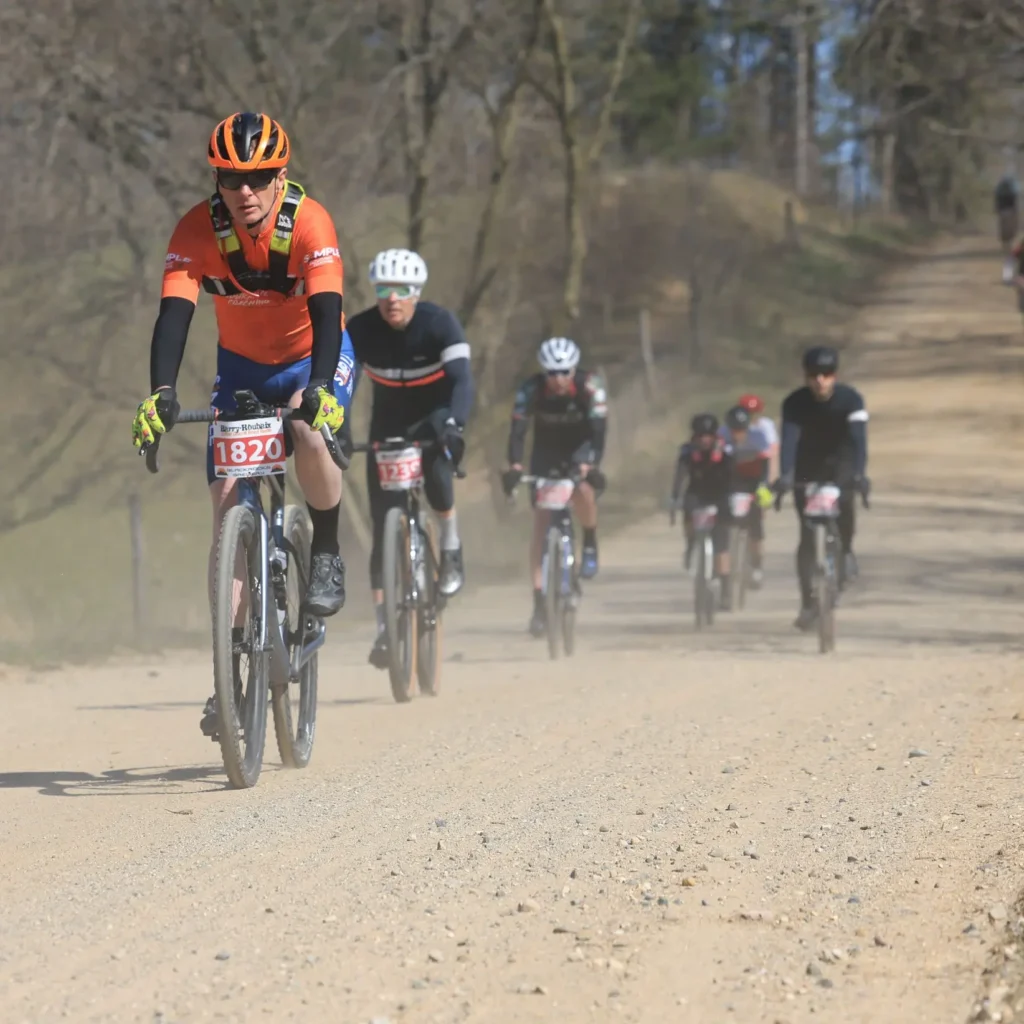
- Gravel races surge
- Group rides surge
- Terrain changes constantly
And that’s okay.
What matters is the intent of the session
- Easy day → mostly easy
- Hard day → intentionally hard
Not:
- Kind of hard… all the time
Here are Three Things to Know About Doing Efforts During an Endurance Ride
1. A few hard efforts won’t ruin your endurance ride
Short climbs or sprints don’t erase aerobic adaptations.
2. Sustained moderate intensity is the real risk
Long stretches of tempo or threshold increase fatigue and dilute the training signal.
3. Recovery cost is what really matters
More intensity = more stress = less consistency over time.
Need More?
Sign up for our free weekly newsletter where you’ll get these articles, plus links to our Athlete’s Compass podcast and other training tools.
Unlock the secrets to mastering gravel racing with our FREE Guide to Gravel Racing! Get yours here.
BOOK A CALL so we can discuss your goals, answer questions, and talk about making your endurance training more effective, fun, and Simple.
Paul Warloski is a:
- USA Cycling Level 1 Advanced Certified Coach
- RRCA Running Coach
- Training Peaks Level 2 Coach
- RYT-200 Yoga Instructor
- Certified Personal Trainer
- Certified Nutrition Advisor