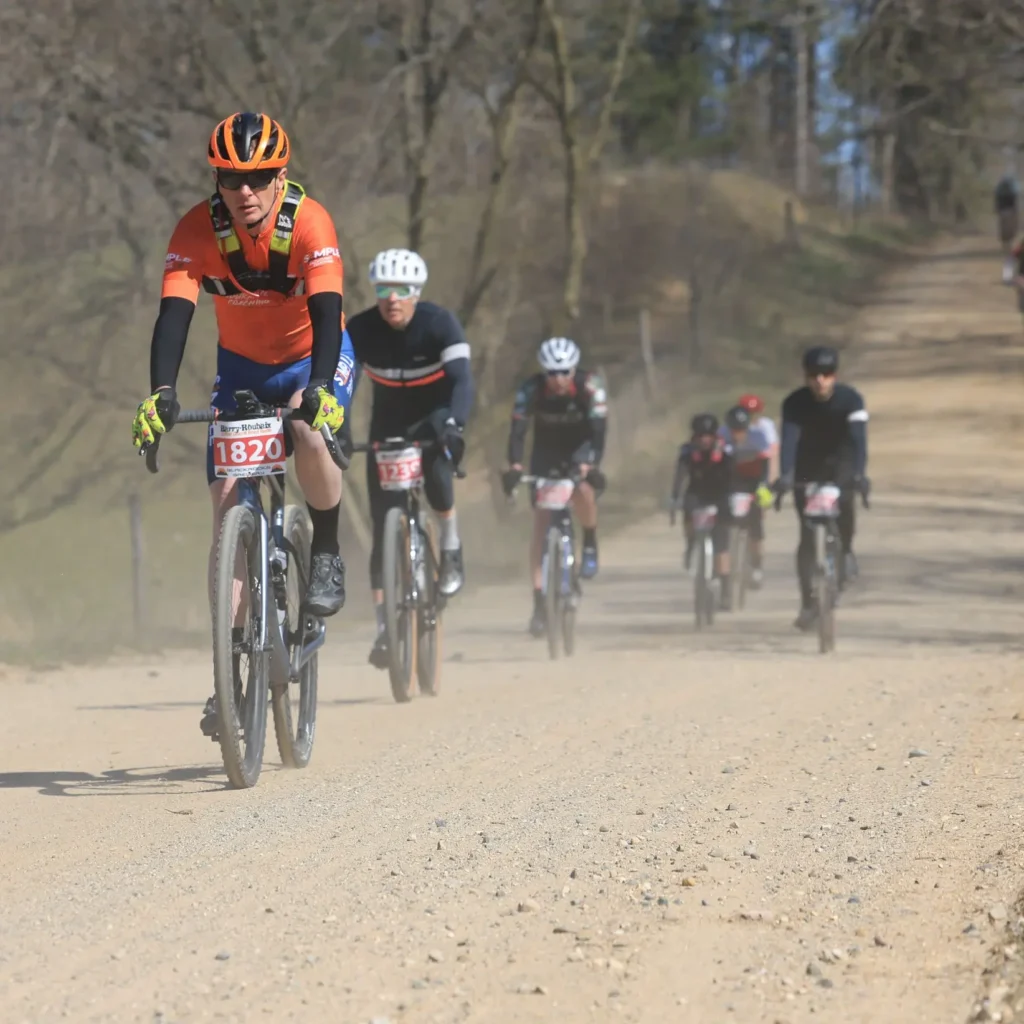
Gravel racing is supposed to be fun.
That might sound obvious, but it’s easy to forget when the alarm goes off early, the workout says “VO2max intervals,” your legs feel heavy, the weather is terrible, and the couch is whispering your name.
Motivation is one of those things athletes think they either have or don’t have.
But motivation is not a personality trait.
It changes with sleep, stress, fueling, training load, weather, life pressure, confidence, and whether the next ride feels meaningful or just like another box to check.
The good news is that you do not need to feel highly motivated every day to train well.
In fact, the most consistent athletes are not always the most motivated.
They are usually the ones with better habits, clearer reasons, flexible plans, and a way to keep some joy in the process.
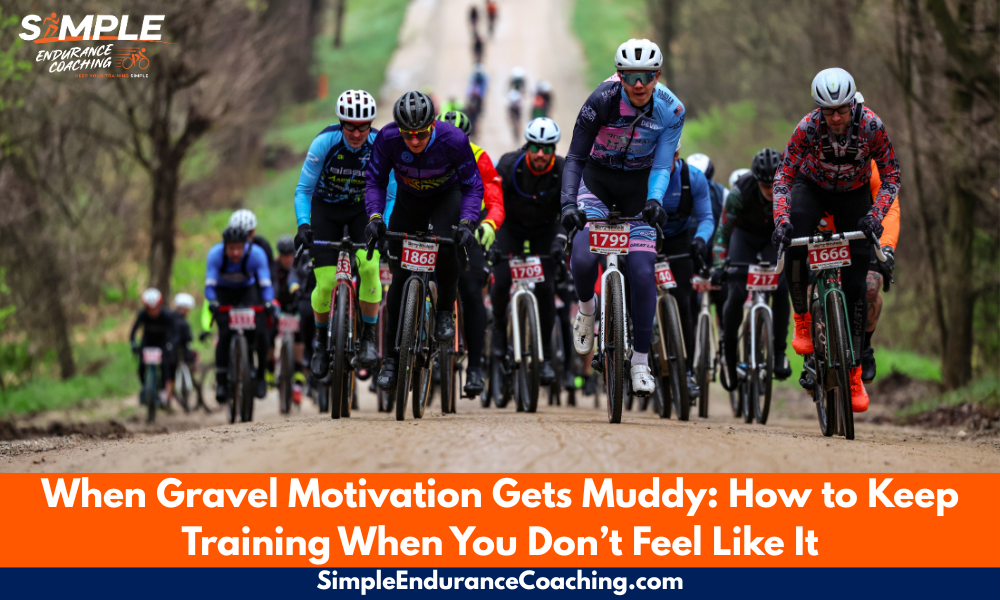
Motivation is not the plan
Motivation is useful, but it is unreliable.
Some days you feel fired up.
Other days you feel flat.
That does not mean anything is wrong with you.
It means you are human.
Research on exercise motivation often points to three big drivers: autonomy, competence, and connection.
In plain language, athletes tend to stay more motivated when they have some choice in what they are doing, when they feel like they are improving, and when they feel connected to other people.
That matters for gravel racing because gravel is not just about watts, heart rate, and intervals.
It is about adventure, challenge, community, problem solving, and seeing what you can do when the road gets rough.
If your training plan feels like punishment, motivation will fade.
If your training connects to something you value, it has a better chance of lasting.
Habits carry you when motivation is low
The best training habit is not a complicated one.
It is a repeatable one.
A habit reduces the number of decisions you have to make.
You do not wake up and negotiate with yourself for 30 minutes.
You already know the cue, the routine, and the next step.
For example:
- Tuesday morning means intervals.
- Thursday means strength.
- Saturday means long ride.
- Sunday means easy spin, walk, mobility, or recovery.
The habit does not make every workout easy.
It simply makes starting easier.
That is important because starting is often the hardest part.
Once you are dressed, the bottle is filled, the bike is ready, and you are rolling for 10 minutes, the workout often feels more manageable.
When motivation is low, shrink the decision.
Do not ask, “Do I want to train today?”
Ask, “Can I start with 10 easy minutes?”
Low motivation or something more serious?
Not wanting to train once in a while is normal.
But if motivation disappears for days or weeks, or if it comes with unusual fatigue, poor sleep, irritability, declining performance, frequent illness, loss of appetite, disrupted menstrual function, low libido, dizziness, or feeling cold all the time, the issue may not be motivation.
It may be fatigue, excessive training load, inadequate recovery, or low energy availability.
Low energy availability happens when the body does not have enough energy left after exercise to support normal health and physiological function.
This can affect men and women, younger and older athletes, and recreational athletes as well as professionals.
Here is a useful coaching distinction:
Low motivation often says: “I don’t feel like doing this.”
Fatigue or under-fueling often says: “I don’t feel like myself.”
That difference matters.
If you are simply unmotivated, a short ride, a change of route, or meeting a friend may help.
If you are deeply tired, unusually flat, getting slower despite training harder, or dragging through normal life, the answer is probably not more discipline.
The answer may be food, rest, recovery, reduced training load, and possibly medical or professional support.
What to do when motivation is low
First, lower the barrier.
Do the warmup.
Ride for 10 minutes.
Start the strength session with one set.
Put on the shoes.
Open the garage door.
Make the beginning so easy that it feels silly not to do it.
Second, give yourself options.
Not every day has to be perfect. If the plan says hard intervals but your body says no, you can adjust:
- Do an endurance ride.
- Do skills practice.
- Do mobility work like yoga.
- Do a short strength session.
- Take a recovery day.
- Move the harder session to tomorrow.
Flexible athletes are often more consistent than rigid athletes.
Third, reconnect the workout to the goal.
You are not doing intervals because intervals are magical.
You are doing them so you can handle the surges, climbs, wind, and rough roads of gravel racing.
You are not doing strength because you love squats.
You are doing it so your back, hips, shoulders, and legs hold up after three, five, or eight hours on the bike.
You are not doing easy endurance rides because they are exciting.
You are doing them because endurance is the foundation that lets you race longer, recover better, and enjoy the day more.
Build in the joy factor
Gravel racing has a joy factor that many other endurance events do not.
There is the crunch of tires on dirt.
The ridiculous aid stations.
The wrong turns.
The sunrise rollout.
The creek crossings.
The gas station Coke.
The new friend who convinces you that one more hill is “probably the last one.”
The feeling of finishing dusty, tired, and proud.
Training should include some of that.
Not every workout will be fun.
Some workouts are just work.
But if training never includes joy, curiosity, adventure, or connection, motivation will eventually wear down.
Try adding one joy-based ride each week or every other week:
- Ride a new road.
- Meet a friend.
- Explore without staring at your power meter.
- Stop for coffee.
- Practice cornering on loose gravel.
- Ride at sunrise.
- Take the long way home.
- Do a no-pressure adventure ride.
- Leave the intervals behind once in a while.
Joy is not the opposite of serious training.
Joy is one of the reasons training becomes sustainable.
Discipline matters, but so does honesty
There are days when you need discipline.
There are days when you need to start even though you do not feel like it.
But there are also days when pushing through is the wrong answer.
The skill is learning the difference.
Ask yourself:
- Did I sleep poorly for one night, or have I been dragging for two weeks?
- Am I avoiding discomfort, or is my body sending a warning?
- Do I feel better after the warmup, or worse?
- Am I under-fueled?
- Have I been eating enough carbohydrates around training?
- Is my resting heart rate, mood, or performance unusually off?
- Would an easier session help, or do I need real recovery?
Motivation is emotional.
Fatigue is physiological.
Burnout is often both.
Good athletes learn to listen before they judge themselves.
The simple gravel motivation plan
When motivation is low, try this:
- Start with 10 minutes.
- Fuel before and after training.
- Make the workout easier if needed.
- Keep the habit, even if the session changes.
- Add one joyful ride each week.
- Train with people when you can.
- Track consistency, not perfection.
- Rest when your body is clearly asking for rest.
Gravel racing rewards fitness, but it also rewards patience, problem solving, resilience, and a sense of humor.
You do not need to feel motivated every day.
You need habits that help you start, a plan flexible enough to respect your life, enough food and recovery to support the work, and enough joy to remember why you started riding gravel in the first place.
Three Things You Should Know About Motivation for Gravel Racing
1. Motivation follows action more often than action follows motivation.
Don’t wait until you feel motivated to train. Starting the workout—even for 10 minutes—often creates the motivation needed to continue.
2. Good habits are more reliable than willpower.
The most consistent gravel racers aren’t motivated every day. They build routines that make training automatic, reducing the need to constantly decide whether to ride.
3. If motivation disappears completely, look beyond motivation.
Persistent lack of motivation combined with unusual fatigue, poor recovery, declining performance, or mood changes may be a sign of excessive training stress or inadequate fueling rather than a lack of discipline.
Need More?
Sign up for our free weekly newsletter where you’ll get these articles, plus links to our Athlete’s Compass podcast and other training tools.
Unlock the secrets to mastering gravel racing with our FREE Guide to Gravel Racing! Get yours here.
BOOK A DISCOVERY CALL so we can discuss your goals, answer questions, and talk about making your endurance training more effective, fun, and Simple.
Paul Warloski is a:
- USA Cycling Level 1 Advanced Certified Coach
- RRCA Running Coach
- Training Peaks Level 2 Coach
- RYT-200 Yoga Instructor
- Certified Personal Trainer
- Certified Nutrition Advisor