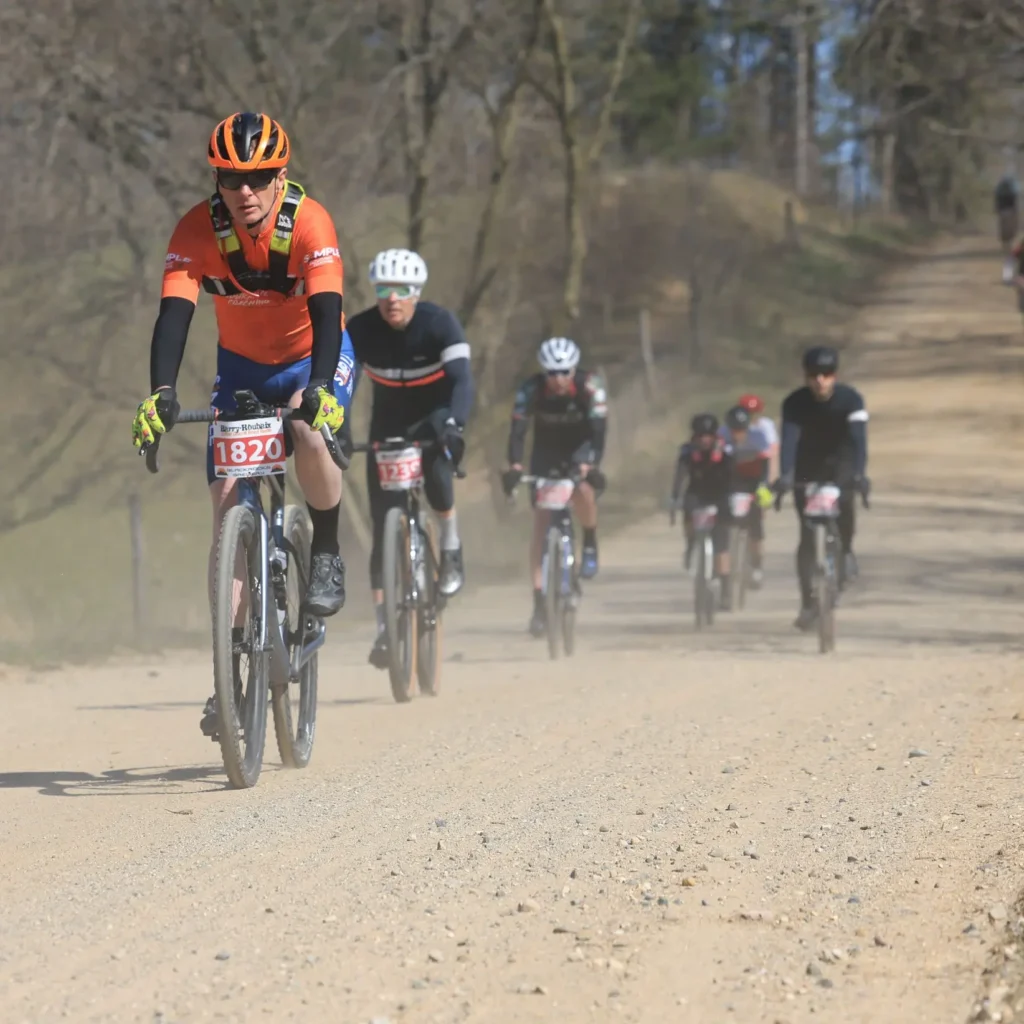
You aren’t getting slower because you’re over 40.
You’re getting slower because your body is asking for something different than it did when you were 25.
I see it all the time.
A gravel cyclist comes to me frustrated because they’ve been riding more than ever, yet they don’t seem to be making progress.
A trail runner tells me they’re doing every workout on the training plan but feel tired all the time.
A cyclocross racer wonders why every interval session feels harder than it should.
They’ve reached the point where they start asking themselves a difficult question.
“Maybe this is just what getting older feels like.”
Most of the time, it isn’t.
The problem usually isn’t age.
The problem is that they’re creating more training stress than they’re allowing themselves to recover from.
Understanding two classic training concepts—General Adaptation Syndrome (GAS) and supercompensation—helps explain why.
More importantly, they explain why the solution usually isn’t training harder.
It’s learning how to recover well enough to adapt.

Your Body Still Adapts After 40
One of the biggest myths in endurance sports is that athletes stop improving after 40.
The research tells a different story.
Masters athletes continue to improve strength, endurance, and race performance well into their forties, fifties, sixties, and beyond, although the rate of improvement and recovery may change with age.
The difference is that recovery often becomes more important.
As we get older, muscle protein synthesis is slower, connective tissue heals more gradually, sleep quality may decline, hormones change, and life outside of training often becomes more demanding.
Careers become busier.
Kids become teenagers.
Parents begin needing care.
Sleep becomes less predictable.
Stress increases.
None of that means you can’t improve.
It simply means your body needs enough recovery to turn training into fitness.
Stress Is What Starts the Process
Every workout places stress on your body.
That’s exactly what it’s supposed to do.
A long gravel ride challenges your aerobic system.
A cyclocross workout filled with repeated accelerations challenges your cardiovascular system, muscles, and nervous system.
A technical trail run taxes your endurance, balance, coordination, and connective tissue.
Immediately after that workout, you aren’t fitter.
You’re more fatigued.
Your muscle glycogen has been reduced.
Your muscles have experienced mechanical stress.
Your nervous system has been challenged.
Your body has been pushed away from its normal balance.
That temporary disruption is exactly what tells your body to adapt.
General Adaptation Syndrome Explains Why
Back in 1936, endocrinologist Hans Selye described what he called General Adaptation Syndrome.
He wasn’t studying endurance athletes.
He was studying how living organisms respond to stress.
His model described three stages.
Alarm.
Resistance.
Exhaustion.
Although modern exercise science recognizes that training adaptations are far more complex than this simple model, GAS remains a helpful way to understand what happens during training.
First comes the stress.
Then comes the adaptation.
If the stress continues without enough recovery, performance eventually declines.
That simple idea is just as true today as it was nearly 90 years ago.
Recovery Is Where Fitness Is Built
This is probably the biggest misunderstanding I see among masters athletes.
Many athletes believe the workout is what makes them stronger.
The workout only starts the process.
Recovery is where the body actually adapts.
After exercise, your body begins restoring glycogen, repairing muscle tissue, producing new proteins, building mitochondria, improving capillary density, and making the countless cellular changes that improve endurance performance.
That work doesn’t happen during your interval session.
It happens afterward.
This is why the athlete who sleeps well, fuels properly, and recovers consistently often improves faster than the athlete who squeezes in one more hard workout every week.
Why It’s Called Supercompensation
One of my favorite concepts in exercise physiology is supercompensation because the name explains the process.
Imagine you begin today’s ride with a fitness level of 100.
You complete a demanding gravel workout.
Immediately afterward, your ability to perform drops because you’re tired.
Eventually, you recover.
If everything goes well, your body doesn’t simply return to 100.
It temporarily prepares itself to better handle that same stress in the future.
Maybe your new capacity is 101.
Or 102.
That small improvement is supercompensation.
If your body simply returned to where it started, that would be compensation.
Instead, it slightly overcompensates.
One of the clearest examples is muscle glycogen.
Following prolonged exercise and adequate carbohydrate intake, muscles can actually store more glycogen than they held before the workout.
Researchers have measured this response for decades.
The popular graph showing one workout followed by one perfect supercompensation peak is an oversimplification.
Different tissues recover at different rates.
There isn’t one magical recovery timeline.
But the principle remains incredibly useful.
Stress the body.
Recover.
Adapt.
Repeat.
Why So Many Masters Athletes Feel Stuck
Here’s what often happens.
Monday is a recovery ride.
Tuesday is intervals.
Wednesday becomes the fast group ride because friends invited them.
Thursday is strength training.
Friday is another ride because they felt guilty taking the day off.
Saturday is the long ride.
Sunday becomes another hard ride because they felt good.
On paper, they’re incredibly consistent.
In reality, they’re accumulating fatigue faster than they’re adapting.
They aren’t lacking motivation.
They’re lacking recovery.
One of the hardest lessons for experienced athletes is accepting that another workout isn’t always the answer.
Sometimes the most productive decision is finishing today’s ride feeling like you could have done more.
The most important workout is the next day’s.
Consistency Beats Hero Workouts
When athletes ask me the secret to improving after 40, they’re often expecting a new interval workout or a better nutrition strategy.
Those things matter.
But they’re rarely the biggest answer.
The biggest answer is consistency.
Not perfect consistency.
Life doesn’t work that way.
Masters athletes have jobs.
Families.
Business trips.
Aging parents.
Unexpected illnesses.
Poor nights of sleep.
Consistency doesn’t mean never missing a workout.
It means returning to your training plan again and again.
The athlete who trains reasonably well for eleven months almost always outperforms the athlete who strings together three heroic weeks before burning out.
That’s because your body responds to repeated training signals.
Not occasional training camps.
Not epic rides that earn lots of Strava comments.
Repeated, appropriate stress over months and years.
More Is Not Better
One of the biggest mistakes I see is assuming progress has stalled because there isn’t enough training.
Sometimes that’s true.
More often, it isn’t.
Athletes over 40 often confuse accumulated fatigue with a lack of fitness.
They feel flat.
The intervals feel difficult.
Power numbers aren’t where they want them.
They assume they’ve lost fitness.
Then they add another hard workout.
In many cases, reducing fatigue would reveal the fitness they already built.
This is one reason tapering works so well.
You don’t create a huge amount of new fitness during race week.
You simply remove enough fatigue to express the fitness you’ve already earned.
What This Means for Gravel Cyclists, Cyclocross Racers, and Trail Runners
If you’re preparing for a gravel race, don’t judge your fitness based on one difficult Tuesday workout.
Look at the last three months.
If you’re racing cyclocross, don’t assume every interval session needs to leave you exhausted.
Quality beats quantity.
If you’re training for a trail race, remember that your muscles, tendons, and connective tissue often recover more slowly than your motivation does.
Train hard enough to create an adaptation.
Recover well enough to benefit from it.
Then repeat the process next week.
And the week after that.
Keep Your Training Simple
The athletes I coach in their forties, fifties, sixties, and even seventies continue setting personal bests.
They finish gravel races they once thought were impossible.
They climb hills faster.
They recover better.
They enjoy the process more.
Not because they’re training harder than everyone else.
Because they understand when to push.
When to recover.
And how to stay consistent long enough for adaptation to happen.
Your body isn’t broken.
It simply needs the right balance of stress and recovery.
That’s how fitness is built.
One ride.
One workout.
One week at a time.
Keep your training simple.
Three Things You Should Know About Training After 40
1. Your body still adapts—it simply demands better recovery.
Masters athletes continue to get stronger and faster when training stress is balanced with sleep, nutrition, strength training, and recovery.
2. Fitness is built after the workout, not during it.
The workout creates the stimulus, but recovery is where your body repairs, rebuilds, and adapts to become more capable.
3. Consistency beats intensity every time.
Months of appropriately balanced training will always outperform a few heroic weeks followed by fatigue, illness, or burnout.
Need More?
Sign up for our free weekly newsletter where you’ll get these articles, plus links to our Athlete’s Compass podcast and other training tools.
Unlock the secrets to mastering gravel racing with our FREE Guide to Gravel Racing! Get yours here.
BOOK A DISCOVERY CALL so we can discuss your goals, answer questions, and talk about making your endurance training more effective, fun, and Simple.
Paul Warloski is a:
- USA Cycling Level 1 Advanced Certified Coach
- RRCA Running Coach
- Training Peaks Level 2 Coach
- RYT-200 Yoga Instructor
- Certified Personal Trainer
- Certified Nutrition Advisor