Why flavor fatigue happens and how to combat it
If you’ve ever been 4 hours into a 100-mile gravel race, staring at another packet of strawberry gels, and nearly vomited at the thought of putting one more in your mouth, you’ve experienced flavor fatigue.
It’s real, it’s brutal, and it’s one of the biggest reasons riders fade in the back half of long events.
Your body can handle a lot of things.
But chewing the same artificially-flavored goo every 20 minutes for 8 hours?
That’s where most people break.
Why Flavor Fatigue Happens
It’s not just about taste.
Here’s what’s actually going on:
Sensory overload. Your taste buds and gut receptors get saturated with the same sweet signals.
After a few hours, even the thought of another gel triggers a mild gag reflex—not because your body doesn’t need fuel, but because it associates that flavor with being overwhelmed.
Texture monotony. Gels are smooth and sticky. Chews are gummy and sweet.
After hours of the same mouthfeel, your brain starts rejecting it even if your muscles still need the calories.
The gut’s alarm system. When you consume high-concentration sugars repeatedly without variety, your digestive system gets cautious.
It starts slowing absorption as a protective mechanism—which is the opposite of what you need when you’re hammering through hour 6.
How to Combat It
The mix-and-match strategy.
Train your gut on multiple fuel sources during long training rides.
Alternate between gels, chews, real food, and drink mix.
Your gut can learn to process more total carbohydrate when you give it variety.
Front-load calories in easy sections.
Save the quick-hit gels for climbs and technical terrain where you can’t eat.
Use the flowy parts to eat real food that takes longer to digest but keeps you satisfied.
Plan for Hour 5+
This is where races are won or lost.
By then, your stomach wants familiar-but-easy fuel.
Have a transition plan: swap from solid food back to liquid calories, or switch to bland options like plain rice cakes.
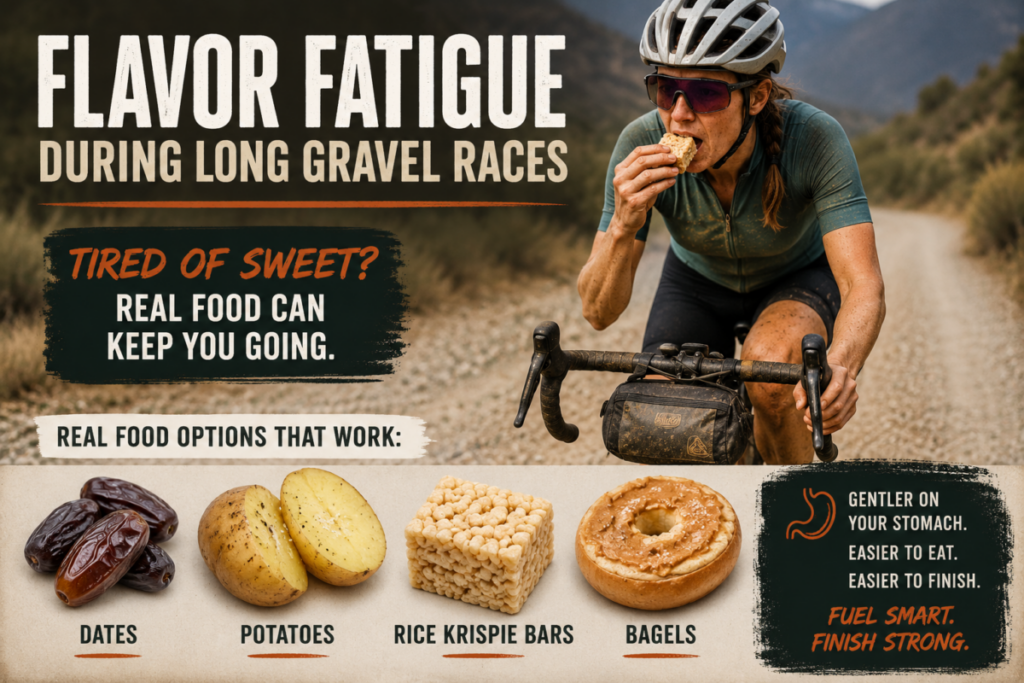
Real Food Options That Actually Work
Here’s where most riders sell themselves short.
Real food isn’t just a “nice-to-have”—it’s often better than processed products for long efforts.
Here’s what I recommend to my athletes:
Salted Potatoes
Potato + salt = pure magic on long rides.
Boil small potatoes, toss with salt, wrap in foil.
The carbs digest easily, the potassium replaces what’s lost in sweat, and the texture is a welcome break from anything gummy.
Dates
Nature’s candy. Medjool dates are soft, chewy, and packed with natural sugars.
Tuck 4-5 in a snack bag. They provide quick energy plus fiber that helps with digestion.
Banana Pieces
Pre-sectioned bananas (cut into chunks before the race) are easy to grab and eat on the fly. Potassium, quick carbs, and real fruit flavor that doesn’t trigger taste fatigue.
Rice Cakes
Make your own or buy pre-made. Sticky rice with a bit of soy sauce and sesame seeds. Chewy, satisfying, and easy to digest. Popular in ultra-running for good reason.
Hummus + Tortilla
A wrap with hummus and a bit of olive oil. Easy to pack, easy to eat, provides fats and carbs together. The savory option when sweet everything else sounds like torture.
Bagels
Easy to eat and good for pre-ride snacks as well.
Rice Krispie Treats
Easy to digest and good with pieces of chocolate or m&ms.
The Bottom Line
Gels and chews have their place—they’re compact, they’re fast, and they work.
But relying on only packaged fuels is like training with only one gear.
You won’t get far.
Mix real food into your training rides.
Figure out what your gut tolerates.
Build a race day plan that includes variety.
And when you’re crawling through hour 6 of your next gravel race, your stomach will thank you for the break.
Three Things to Know About Real Food During a Gravel Ride
1. Real food prevents flavor fatigue by giving your gut variety instead of the same processed sugars hour after hour.
2. Foods like potatoes, bananas, and rice digest easier and provide minerals gels simply don’t have.
3. Test everything in training—if it doesn’t work on a 4-hour ride, it won’t work on race day.
Need More?
Sign up for our free weekly newsletter where you’ll get these articles, plus links to our Athlete’s Compass podcast and other training tools.
Unlock the secrets to mastering gravel racing with our FREE Guide to Gravel Racing! Get yours here.
BOOK A CALL so we can discuss your goals, answer questions, and talk about making your endurance training more effective, fun, and Simple.
Paul Warloski is a:
- USA Cycling Level 1 Advanced Certified Coach
- RRCA Running Coach
- Training Peaks Level 2 Coach
- RYT-200 Yoga Instructor
- Certified Personal Trainer
- Certified Nutrition Advisor