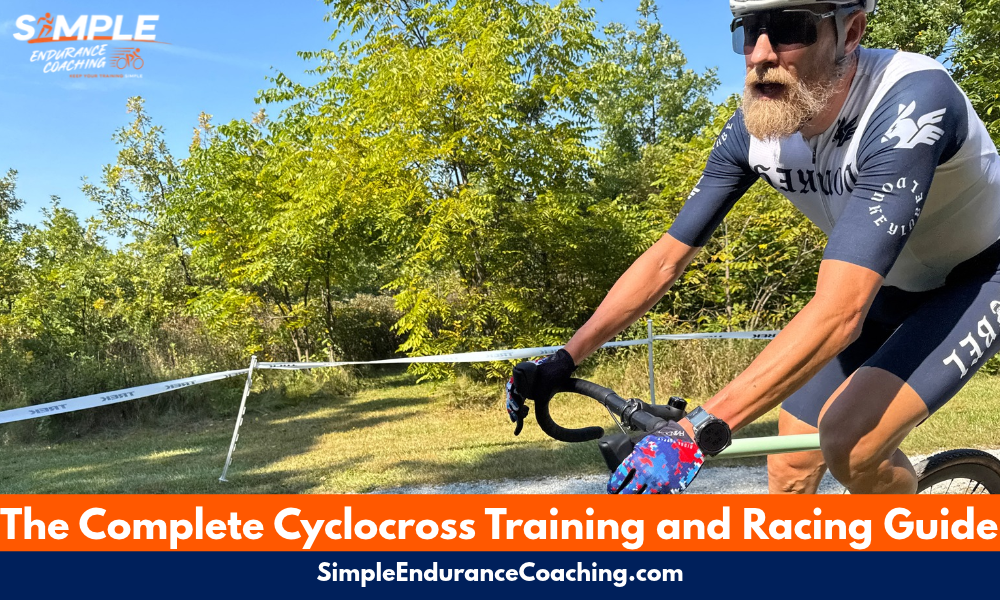
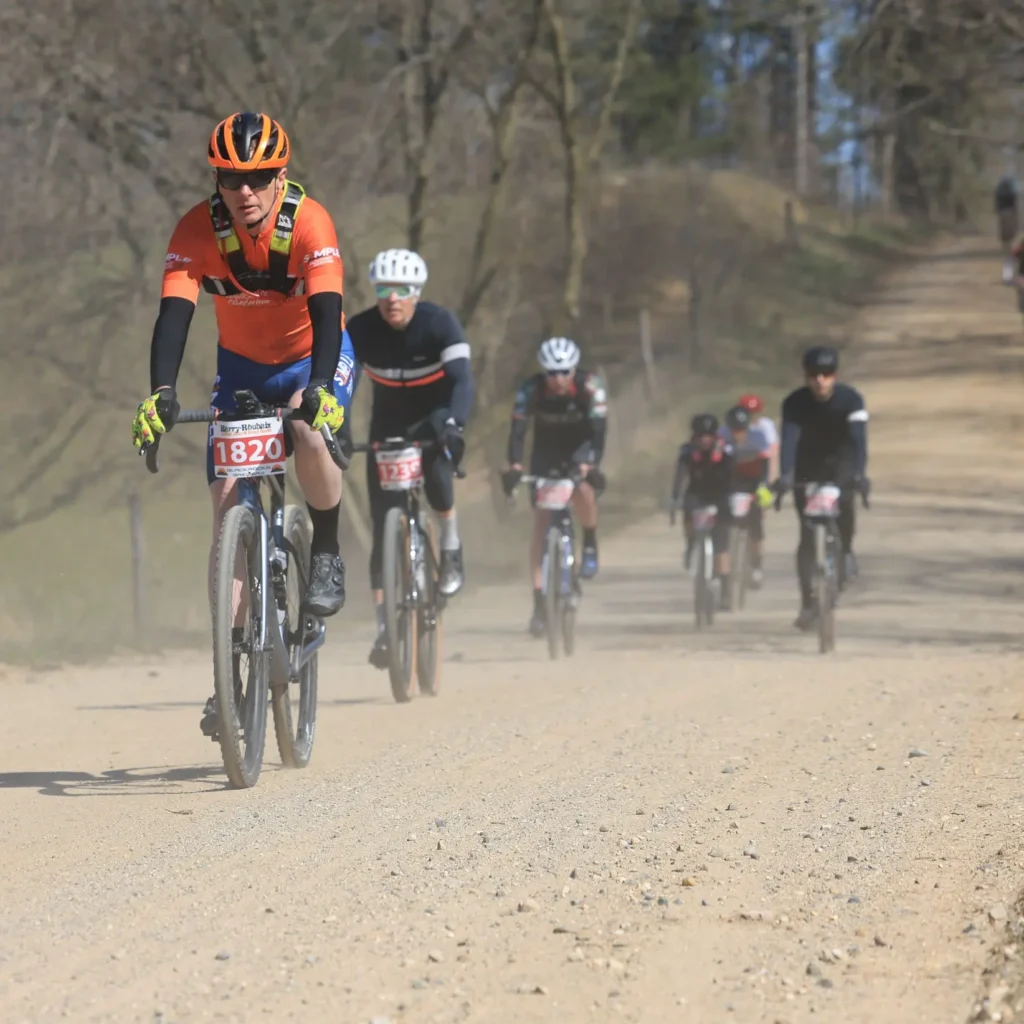
Your cyclocross season is over. You know your results, but do you know what your training data is telling you about how to improve next year?
Maybe you finished stronger than expected. Maybe you struggled with fatigue, lost positions halfway through races, or couldn’t produce the power you knew you had.
For masters and junior cyclocross racers, the end of the season is an opportunity to evaluate more than finishing positions.
Your heart rate, power, training intensity, recovery, nutrition, and even how you felt before and after races can help explain what worked and what needs to change.
The challenge is knowing how to interpret that information.
Before adding more intervals or longer rides to your training plan, let’s look at what your season can teach you.

1. Did Your Training Prepare You for the Demands of Cyclocross?
Cyclocross is different from road or gravel racing.
You need repeated accelerations, short bursts of high power, the ability to recover between efforts, and enough aerobic endurance to maintain your performance throughout the race.
Start by reviewing your training over the previous three to four months.
Look at your total training hours, weekly consistency, and time spent in different intensity zones.
Did you have enough endurance training to support repeated hard efforts? Did you include race-specific intervals? Were you consistently completing workouts, or were you frequently missing sessions?
More training isn’t automatically better training.
A masters racer training six to eight hours per week may benefit more from consistent endurance rides and two well-placed intensity sessions than from adding another exhausting workout.
A junior racer may need a different balance, depending on training age, development, school commitments, and racing experience.
The important question isn’t simply how much you trained. It’s whether your training matched the demands of your racing.
2. What Did Your Power Data Tell You?
If you race with a power meter, your race files can provide valuable information.
Cyclocross power is highly variable. Cornering, running sections, accelerations, and coasting make average power a limited measure of performance.
Instead, look for patterns.
Did your ability to produce short, hard efforts decline later in races? Could you repeatedly accelerate out of corners? Did your best efforts improve throughout the season?
Compare your power from early-season races with similar efforts later in the season, while accounting for course conditions.
You can also examine your training data. Were your 30-second, one-minute, and three-minute efforts improving? Could you repeat those efforts without a substantial decline?
If your power dropped dramatically during the second half of races, the explanation might involve aerobic conditioning, repeated-effort capacity, pacing, fueling, or fatigue.
Your power numbers identify questions worth investigating. They don’t always provide the answers by themselves.
3. What Did Your Heart Rate Tell You?
Heart rate adds another perspective to your training and racing.
Look at your heart rate during endurance rides, interval sessions, and races.
Were you producing more power at a similar heart rate as the season progressed? Were your endurance rides becoming easier at the same pace or power?
Those changes may indicate improved aerobic fitness.
But heart rate also responds to fatigue, temperature, hydration, illness, and psychological stress.
An unusually high heart rate during an easy workout might indicate heat, dehydration, or accumulated stress. An unusually low response during hard efforts, especially alongside poor performance and heavy legs, may suggest fatigue.
During cyclocross races, heart rate often remains elevated because of repeated hard efforts and limited recovery.
Rather than focusing on a single number, compare trends across several weeks.
For masters racers especially, recognizing changes in recovery and training response can be as valuable as tracking peak power.
4. Did You Need More Recovery Instead of More Training?
One of the biggest mistakes cyclocross racers make is assuming that disappointing results mean they need to train harder.
But racing every weekend creates substantial physical and mental stress.
Consider how you felt on Mondays and Tuesdays after racing.
Were you recovering enough to complete quality workouts later in the week? Did your legs feel heavy for several days? Were you losing motivation or struggling to sleep?
Look at your training intensity distribution.
If you’re racing on Sunday, completing hard intervals on Tuesday, and adding another demanding workout on Thursday, you may be accumulating more fatigue than you can recover from.
For masters athletes, recovery capacity varies considerably and may change with age, sleep, work stress, and training history.
Junior athletes also need adequate recovery, particularly while balancing school, growth, and other sports.
Sometimes the best adjustment for next season isn’t adding training volume.
It’s creating more space between demanding sessions so you can actually benefit from the work.
5. Did Your Warm-Up Prepare You to Race?
Cyclocross starts are intense.
Within seconds, you’re accelerating hard, fighting for position, and approaching the first technical section.
If you regularly struggled during the opening minutes, consider whether your warm-up prepared you for those demands.
Did you arrive early enough to ride the course? Did you complete progressively harder efforts before the start? Did you spend too much time standing around after warming up?
A good cyclocross warm-up generally includes easy riding, progressively increasing intensity, and a few short race-like accelerations.
The exact duration depends on the athlete, weather, and race demands.
If your breathing, legs, or power felt significantly better after the first lap, experiment with a more structured warm-up next season.
But remember that first-lap struggles can also reflect starting position, technical skills, pacing, and race-day anxiety.
6. Did You Fuel Your Training and Racing Properly?
Nutrition is another area where racers often overlook opportunities for improvement.
Because cyclocross races are relatively short, athletes sometimes assume fueling doesn’t matter.
But your race-day performance depends partly on how well you’ve fueled the preceding days and your warm-up.
Did you eat enough carbohydrates before racing? Were you arriving at the start hungry or underfueled? Were you adequately fueling your demanding training sessions throughout the week?
For hard workouts lasting more than an hour, carbohydrate intake during training can help maintain performance and support recovery.
For a typical 40- to 60-minute cyclocross race, consuming carbohydrates during the race usually isn’t necessary when you start adequately fueled.
Pre-race nutrition matters more. I tell my athletes to consume a gel as they’re waiting in callups.
Junior athletes, in particular, need sufficient overall energy intake to support training, growth, and development.
The goal isn’t to eat as little as possible.
It’s to fuel for the work required so you can train effectively, recover, and race well.
7. What Did Your Subjective Feelings Tell You?
Not every important training metric comes from a device.
How did you feel during the season?
Did you look forward to racing? Were you confident at the start? Did you feel strong in technical sections but struggle on longer power sections?
Did you finish races feeling that you had given everything, or did you feel exhausted before the race even started?
Training logs that include perceived exertion, sleep quality, soreness, motivation, and general fatigue can reveal patterns that power and heart rate alone miss.
You might discover that your best races followed lighter training weeks.
Or that your strongest performances happened when you arrived relaxed, well-fed, and confident.
These observations are important because successful training involves more than physiological adaptation.
It also involves preparation, confidence, and enjoyment.
8. How Do You Turn This Information Into a Better Season Next Year?
The biggest challenge isn’t collecting data.
It’s deciding what to do with it.
You might need more aerobic endurance, better repeated high-intensity efforts, improved technical skills, a different recovery schedule, or a more consistent nutrition strategy.
But trying to change everything at once makes it difficult to determine what’s working.
Start by identifying your two or three biggest limitations.
Then build your offseason training around addressing those limitations while maintaining your strengths.
This is where working with a coach can make a difference.
At Simple Endurance Coaching, we help masters and junior cyclocross racers review their training and racing, identify the factors limiting performance, and create training plans that fit their lives.
We look beyond FTP and finishing positions to examine consistency, intensity, recovery, strength, fueling, and race preparation.
The goal is to arrive at next season stronger, better prepared, and more confident about your training.
Schedule a free Discovery Call to discuss what your cyclocross season taught you and how we can use those lessons to prepare for next year.
Three Things You Should Know
1. Your training data tells a bigger story than your race results. Heart rate, power, training volume, intensity distribution, and subjective feelings can help identify what improved and what limited your performance.
2. More training isn’t always the answer. Better recovery, race-specific workouts, structured warm-ups, and appropriate fueling may produce greater improvements than simply adding hours or intervals.
3. Use this season to make specific changes for next year. Identify your biggest limitations, develop a focused offseason plan, and consider working with a coach who can help you interpret your data and make better training decisions.
Need More?
Sign up for our free weekly newsletter where you’ll get these articles, plus links to our Athlete’s Compass podcast and other training tools.
Unlock the secrets to mastering gravel racing with our FREE Guide to Gravel Racing! Get yours here.
BOOK A DISCOVERY CALL so we can discuss your goals, answer questions, and talk about making your endurance training more effective, fun, and Simple.
Paul Warloski is a:
- USA Cycling Level 1 Advanced Certified Coach
- RRCA Running Coach
- Training Peaks Level 2 Coach
- RYT-200 Yoga Instructor
- Certified Personal Trainer
- Certified Nutrition Advisor