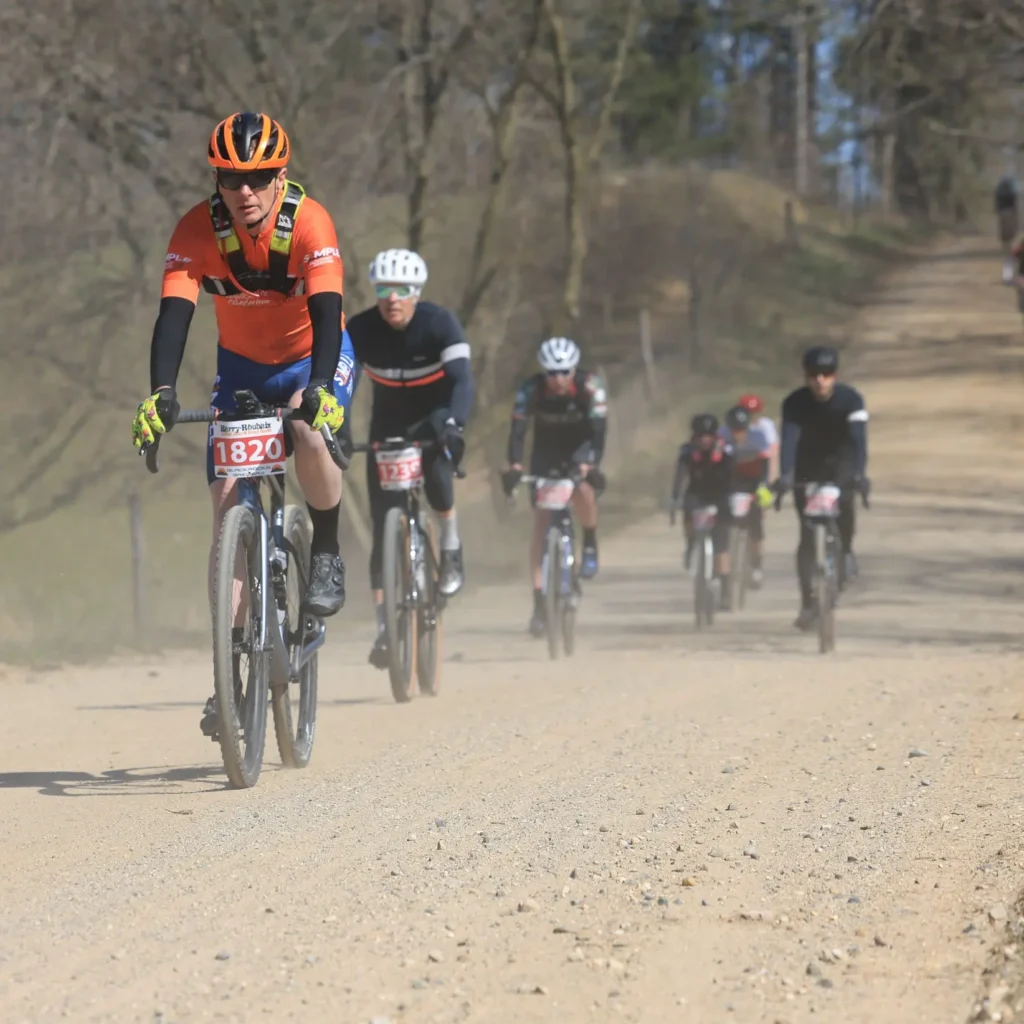
Your final cyclocross race is over.
You’ve cleaned the mud off your bike, packed away your race equipment, and started thinking about next season.
Maybe you’re already planning your winter training.
But there’s a question you should answer before jumping into another training block: How much recovery do you actually need after a long cyclocross season?
If you’ve spent September, October, and November racing nearly every weekend, your body has accumulated considerable stress.
Even if your races lasted only 30 to 60 minutes, the repeated high-intensity efforts, accelerations, running, technical demands, and race-day stress can leave you carrying more fatigue than you realize.
For masters cyclocross racers, especially those balancing training with work and family responsibilities, the transition between racing and winter training is an opportunity to recover physically and mentally.
The goal isn’t to stop training indefinitely.
It’s to recover enough that your next training block actually makes you stronger.
Why Do You Need Recovery After Cyclocross Season?
Cyclocross creates a different kind of fatigue than steady endurance riding.
During a race, you’re repeatedly accelerating out of corners, producing power above threshold, running up steep hills, and recovering for only a few seconds before doing it again.
Those efforts place significant demands on your cardiovascular system, muscles, and nervous system.
Now multiply those demands by eight, ten, or twelve weekends of racing.
Even if you’ve managed your training well, some accumulated fatigue is likely.
And fatigue isn’t always obvious.
You might maintain reasonable power numbers while feeling less motivated to train.
You might notice that your legs feel heavy during workouts that previously seemed manageable.
Or you might simply feel relieved that you don’t have to race again next weekend.
These are useful signals.
Recovery after cyclocross season isn’t just about allowing your muscles to repair. It’s about restoring your readiness to train consistently.
How Much Time Should You Take Off?
There’s no scientifically established number of recovery days that works for every cyclocross racer.
Your needs depend on how much you raced, how well you recovered during the season, your overall training load, and how you’re feeling physically and mentally.
For many athletes, a transition period of approximately one to two weeks is a reasonable starting point.
That doesn’t necessarily mean two weeks completely off the bike.
Here’s how I generally approach the transition.
The first three to five days: Prioritize recovery.
Take a few days completely off structured training.
Walk, do some gentle yoga, sleep, and spend time doing activities you may have neglected during the racing season.
If you want to ride, keep it short, easy, and enjoyable.
Don’t worry about intervals, training zones, or hitting a specific Training Stress Score.
The remainder of the first week: Let your body guide you.
If you’re feeling better, introduce some easy endurance riding.
Keep the rides relatively short and avoid high-intensity efforts.
If you’re unusually tired, extend your recovery.
The second week: Gradually return to consistency.
If your energy, motivation, and general readiness have returned, begin increasing your easy training volume.
I generally add in strength training to immediately start building a base of strength and fitness.
However, you don’t need to immediately resume VO2max intervals, threshold workouts, or demanding group rides.
Athletes with significant accumulated fatigue may benefit from a longer transition.
The important point is that your recovery should be based on your readiness, not simply the number of days on the calendar.
You should feel excited and ready to resume training.
Will I Lose Fitness If I Take Two Weeks Off?
This is one of the biggest concerns I hear from cyclists.
You’ve worked hard to build fitness throughout the year.
Why would you deliberately stop training?
The answer is that a short period of reduced training doesn’t erase months of adaptation.
Some physiological changes associated with detraining can begin within a couple of weeks, particularly with complete inactivity.
However, maintaining a small amount of easy aerobic activity can help preserve fitness while substantially reducing training stress.
And the fitness you temporarily give up may be less important than the recovery you gain.
Consider the alternative.
You finish your cyclocross season exhausted, immediately begin a demanding winter training program, and struggle through workouts for the next month.
You might be training consistently, but you’re not necessarily adapting effectively.
A short transition period can help you approach winter training with renewed energy and motivation.
Masters Athletes: Do You Need More Recovery?
As we age, recovery can become more complicated.
Masters cyclists may experience changes in sleep, muscle recovery, hormonal regulation, and the ability to tolerate repeated demanding sessions.
However, chronological age alone doesn’t determine recovery needs.
A well-trained 65-year-old who manages training stress effectively may recover better than a younger athlete who consistently under-sleeps and under-fuels.
For masters cyclocross racers, I pay particular attention to several indicators:
- Persistent muscle soreness or heavy legs
- Sleep quality and duration
- Motivation to train
- Resting heart rate and heart rate variability trends
- Performance during easy endurance rides
- Overall energy and mood
No single metric tells the entire story.
A lower HRV reading or elevated resting heart rate on one morning doesn’t automatically mean you need additional days off.
Look for patterns over several days, alongside how you actually feel.
For junior athletes, the transition should also consider school demands, emotional fatigue, enjoyment, and the need for variety rather than rushing into another structured season.
What About Strength Training During the Transition?
Winter is an excellent opportunity to develop strength.
But that doesn’t mean you should begin your hardest strength program the Monday after your final cyclocross race.
If you’ve maintained strength training throughout the season, you may be ready to resume a more substantial program relatively quickly.
If you’ve done little strength training since August, start gradually.
Begin with manageable loads, fewer sets, and exercises that allow you to rebuild movement quality.
Heavy squats, deadlifts, and other compound movements can be valuable for cyclists, but introducing too much volume too quickly can create significant soreness.
Your goal is to establish a strength-training routine that complements your cycling rather than competing with your recovery.
For most masters cyclists, two appropriately programmed strength sessions per week can be a useful starting point during the winter, depending on training history and recovery capacity.
Don’t Forget About Nutrition and Sleep
Recovery doesn’t happen simply because you stop doing intervals.
Your body needs sufficient energy and nutrients to repair muscle tissue and replenish glycogen.
Continue eating enough to support your activity and recovery.
Include adequate protein throughout the day, carbohydrates appropriate to your training demands, and a variety of nutrient-dense foods.
This isn’t the ideal time to begin an aggressive weight-loss program.
Sleep is equally important.
If you’ve been getting up early to train, traveling to races, and balancing family responsibilities, your sleep may have suffered throughout the season.
Use the transition period to establish consistent sleep habits.
For most adults, seven to nine hours per night is a useful target, with individual needs varying.
How Do You Know You’re Ready for Winter Training?
Rather than choosing an arbitrary date to restart structured training, look for signs that you’re ready.
Ask yourself:
Do I feel motivated to train again?
You don’t need to be excited about every workout, but you should feel interested in getting back to a routine.
Are my easy rides feeling easy again?
If your normal endurance power feels unusually difficult, you may need additional recovery.
Am I sleeping and recovering normally?
Look for consistent improvements in energy, sleep, and general well-being.
Have my lingering aches and pains resolved?
Cyclocross can leave athletes with sore backs, shoulders, knees, and other minor injuries.
Address those issues before increasing training loads.
Can I complete several easy sessions without accumulating unusual fatigue?
That’s a useful practical test before adding demanding intervals.
If significant fatigue persists despite reducing training, consider whether illness, injury, or another medical issue needs evaluation.
Your Winter Training Should Build on Recovery
Once you’re ready, winter training should have a clear purpose.
For most cyclocross racers, that means developing aerobic endurance, improving strength, addressing weaknesses identified during the season, and gradually introducing appropriate intensity.
It doesn’t mean trying to maintain peak cyclocross race fitness throughout December, January, and February.
Your training should prepare you for the demands of your next season, whether that’s spring gravel racing, summer events, or another cyclocross campaign.
At Simple Endurance Coaching, we use the transition period to review the previous season and identify what needs improvement.
Did you struggle with repeated accelerations?
Did you fade late in races?
Did your strength decline?
Were you consistently tired between race weekends?
Those answers help determine what your winter training should look like.
The best winter training plan isn’t necessarily the one that starts earliest. It’s the one you can begin recovered, motivated, and ready to adapt.
Three Things You Should Know
1. Take a transition period after cyclocross season.
For many racers, approximately one to two weeks of reduced training is a reasonable starting point. Some athletes will need more, and others less. Use your fatigue, motivation, and recovery indicators to guide the process.
2. You won’t erase your fitness by recovering.
A short reduction in training may produce some detraining, but it can also help reduce accumulated fatigue. Easy aerobic activity can preserve much of your conditioning while allowing you to recover.
3. Start winter training when you’re ready to benefit from it.
Build your aerobic endurance, strength, and training consistency gradually. Use what you learned during cyclocross season to identify the areas that will make the biggest difference next year.
Ready to Build a Better Winter Training Plan?
If you’re a masters cyclocross or gravel racer wondering how to transition from racing into winter training, Simple Endurance Coaching can help.
We’ll review your season, identify your training needs, and develop a plan that fits your goals, available time, and recovery capacity.
Need More?
Sign up for our free weekly newsletter where you’ll get these articles, plus links to our Athlete’s Compass podcast and other training tools.
Unlock the secrets to mastering gravel racing with our FREE Guide to Gravel Racing! Get yours here.
BOOK A DISCOVERY CALL so we can discuss your goals, answer questions, and talk about making your endurance training more effective, fun, and Simple.
Paul Warloski is a:
- USA Cycling Level 1 Advanced Certified Coach
- RRCA Running Coach
- Training Peaks Level 2 Coach
- RYT-200 Yoga Instructor
- Certified Personal Trainer
- Certified Nutrition Advisor