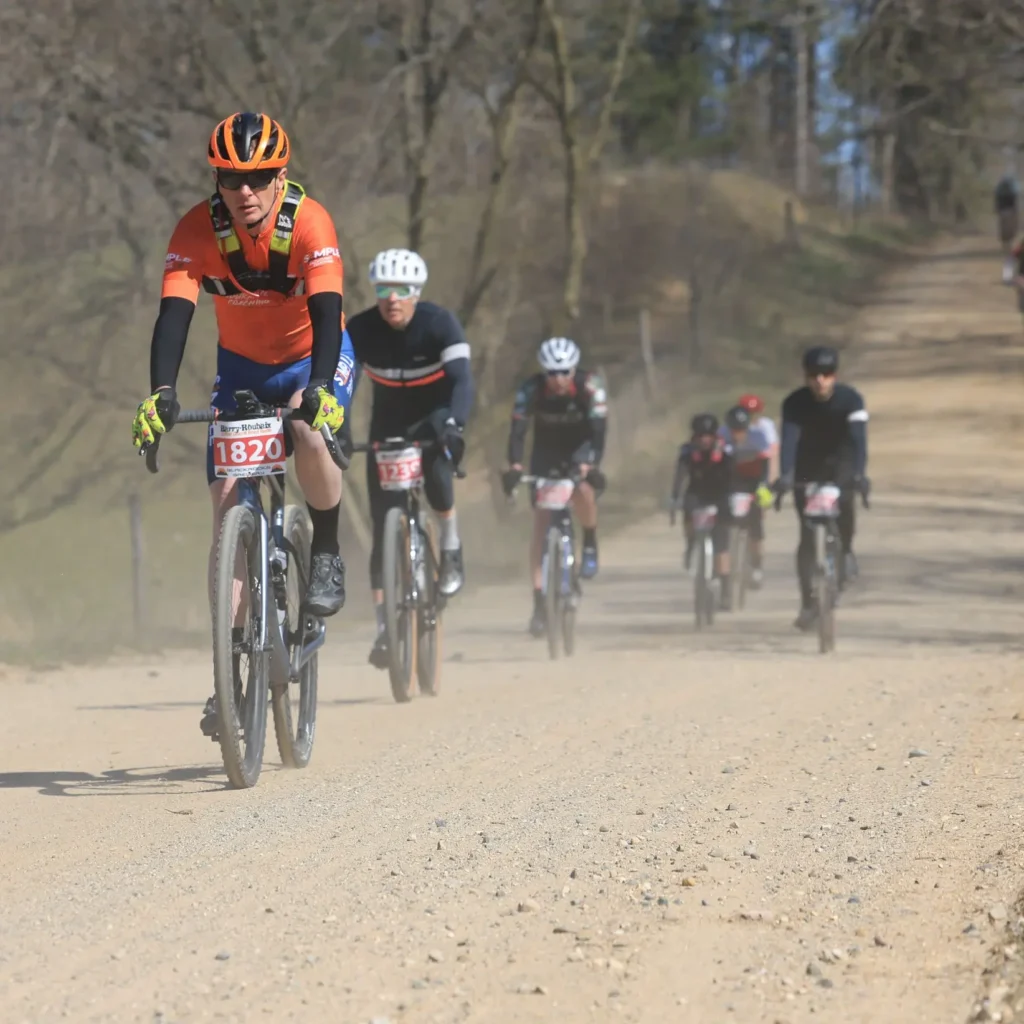
Gravel racing has a reputation for explosive starts, chaotic early miles, and long stretches of lonely riding.
But if your race lasts four hours or more, success rarely comes from the rider who attacks hardest in the first hour.
It usually comes from the rider who manages effort the best.
Pacing is one of the most important skills in endurance sports.
Research consistently shows that how athletes distribute their effort across an event strongly influences performance and fatigue.
For everyday endurance athletes, the goal is simple: Ride fast, but ride sustainably.

Why Pacing Matters in Long Gravel Races
Gravel races often sit in the gray zone between road racing and endurance events.
You may experience tactical surges early, but the event still demands hours of aerobic output.
Studies of ultra-endurance cycling show that athletes who maintain relatively steady intensity can sustain performance for long periods.
For example, in a 24-hour cycling race, an elite rider averaged about 2.8 W/kg with a heart rate around 121 bpm, maintaining a controlled effort for extremely long durations.
More broadly, pacing research across endurance sports shows:
- Even or slightly negative pacing tends to produce the best outcomes in long events.
- Faster athletes generally show less variation in pace than slower competitors.
- Real races are often variable pacing events, with short surges above average intensity due to terrain or tactics.
For gravel racers, that means your pacing strategy needs to handle two realities at once:
- A sustainable aerobic effort for several hours
- Short surges when the terrain or group demands it
How to Pace the Early Miles Without Going Into the Red
The first 30 to 60 minutes of a gravel race are usually the most dangerous.
Everyone is fresh.
Groups are forming.
And the pace is often higher than what you’ll sustain later.
The biggest mistake many racers make is burning too many matches early, trying to hold a group they can’t sustain.
A smarter strategy:
1. Start slightly conservative
Your effort in the opening miles should feel controlled.
If you track power or heart rate, this often means:
- Upper Zone 2 to low Tempo early. Use heart rate (HR) instead of power, since it reflects more accurately how your body is responding to the efforts.
- Brief surges when necessary
- Avoiding sustained threshold efforts
- I like trying to hang onto the front group until my HR gets into zone 4, then dropping slowly back, hopefully with a group of other riders.
2. Let the race settle
Groups tend to reorganize after the initial chaos.
Your goal is not to follow every attack.
It’s to find the fastest group you can realistically stay with for hours.
3. Avoid “ego pacing”
If the early pace requires repeated anaerobic surges, you are likely above your sustainable effort.
Many riders ruin their race in the first 20 miles.
The Sweet Spot for Long Gravel Events
Most successful gravel racers end up riding the bulk of the race near tempo or sweet spot intensity.
That typically means:
- 75–88 percent of FTP
- Upper aerobic / lower threshold heart rate
Why this range works:
- It produces high speed while remaining metabolically sustainable
- Fat oxidation remains meaningful
- Glycogen depletion is slower
This intensity allows you to maintain strong output for four to eight hours while still having the ability to respond to terrain or group surges.
The Art of Negative Splitting a Gravel Race
In theory, the ideal pacing strategy in long events is negative splitting: finishing the second half faster than the first.
In practice, many endurance events drift toward positive pacing, where athletes gradually slow due to fatigue, glycogen depletion, or poor pacing decisions.
Your goal is to avoid that fade.
Here’s how.
1. Protect the first hour
Think of the opening miles as an investment.
If you ride slightly below your maximum early, you’ll often pass riders later who went too deep.
2. Fuel aggressively
Pacing is tightly linked with nutrition.
Without sufficient carbohydrate intake, fatigue forces a positive pacing pattern regardless of strategy.
3. Increase effort late in the race
If you paced correctly, the final hour should allow a slight increase in intensity.
This is where the negative split happens:
- Tempo becomes upper tempo
- Climbs can approach threshold
- You start picking off riders who faded
Gravel Racing Is Never Perfectly Even
One challenge unique to gravel racing is that perfectly steady pacing is impossible.
Terrain, wind, and group tactics force variability.
Research on endurance events shows that athletes frequently alternate between efforts above and below their average race intensity due to these factors.
The key is learning which surges matter.
Surges worth matching:
- Short climbs
- Group accelerations you must follow
- Strategic attacks late in the race
Surges to ignore:
- Early ego moves
- Attacks far from the finish
- Riders far above your ability level
Practical Pacing Plan for a 4–6 Hour Gravel Race
Hour 1
- Controlled effort
- Upper endurance to tempo, especially after the start
- Avoid long threshold efforts
Middle Hours
- Tempo to sweet spot
- Smooth pacing
- Fuel consistently
Final Hour
- Increase intensity if able
- Push climbs harder
- Race the riders around you
If you paced correctly, this is when you feel strongest.
Three Things to Know About Gravel Race Pacing
1. The first hour determines the last hour.
Ride too hard early, and you will pay for it later.
2. Sustainable tempo wins long races.
Most of the race will sit around tempo or sweet spot intensity.
3. Patience beats aggression.
Let the race come back to you in the final miles.
Need More?
Unlock the secrets to mastering gravel racing with our FREE Guide to Gravel Racing! Get yours here.
BOOK A CALL so we can discuss your goals, answer questions, and talk about making your endurance training more effective, fun, and Simple.
Paul Warloski is a:
- USA Cycling Level 1 Advanced Certified Coach
- RRCA Running Coach
- Training Peaks Level 2 Coach
- RYT-200 Yoga Instructor
- Certified Personal Trainer
- Certified Nutrition Advisor