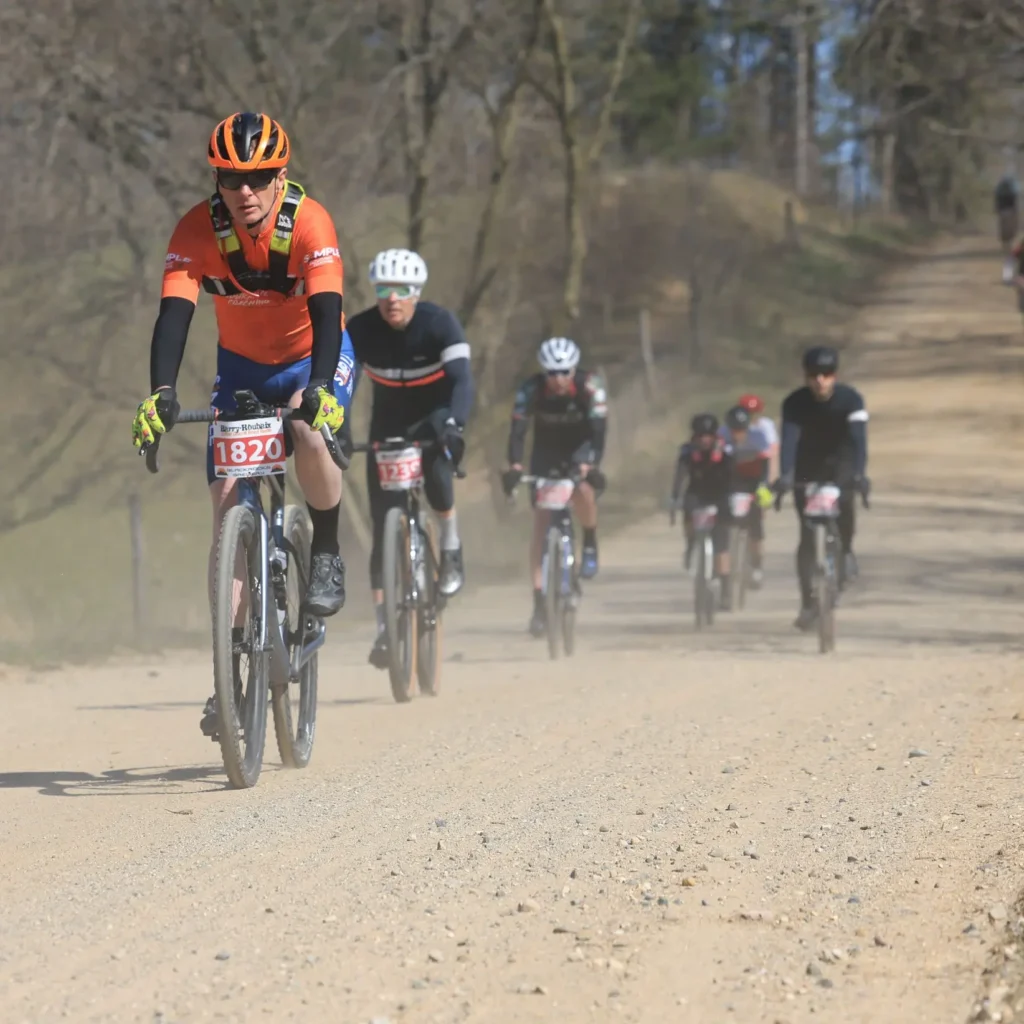
Gravel races can be a long time in the saddle.
Your legs will burn, your lungs will beg for mercy, and somewhere around hour four, your brain will start making questionable decisions about “just one more hill.”
But you can control one critical variable that makes or breaks these epic days: your hydration strategy.
Let’s dig into what actually works for gravel events that stretch past the six-hour mark.
The Real Talk on Hydration in Gravel Racing
Here’s something the research is clear on: most gravel cyclists show up to races already dehydrated, and they get worse throughout the event.
A 2024 study at the Belgian Waffle Ride found that only 22.6% of participants were properly hydrated before the race, and post-race?
Only 15% remained hydrated. Over 65% finished moderately to severely dehydrated.
That’s not a surprise when you think about it.
Gravel courses often have limited aid stations.
The terrain is rough, slowing you down and making it tempting to skip bottles.
And honestly, many of us just don’t have a solid hydration plan.
Let’s fix that.
Electrolyte Balance: The Salt Conversation
Here’s the nuance most people miss: You don’t need electrolytes in your bottle simply because you’re riding a long time.
The key factor is how much plain water you’re drinking.
Here’s the deal:
- If you’re drinking 2+ liters of fluid over 6+ hours, you likely need electrolytes added to that water to replace what you’re sweating out
- If you’re a salty sweater or training/racing in heat, your electrolyte needs go up
- If you already eat a high-sodium diet (you add salt to meals, eat processed foods, etc.), you may need less supplementation than someone on a low-sodium diet
The common mistake?
Chugging plain water without electrolytes during a long, sweaty event.
This can lead to exercise-associated hyponatremia—basically, diluting your blood sodium too much. Not good.
Here’s the practical approach: For a 6+ hour gravel event in moderate conditions, aim for a hydration mix with 300-500mg sodium per liter.
If it’s hot or you’re a heavy sweater, bump that up.
And if you’re barely drinking (some people struggle with big fluid volumes on gravel), you might need less sodium concentration since you’re not losing as much through sweat.
Fluid Intake Rates: The “Drink to Thirst” Truth
Let me give you permission to stop stressing about hitting exact milliliter targets every 15 minutes.
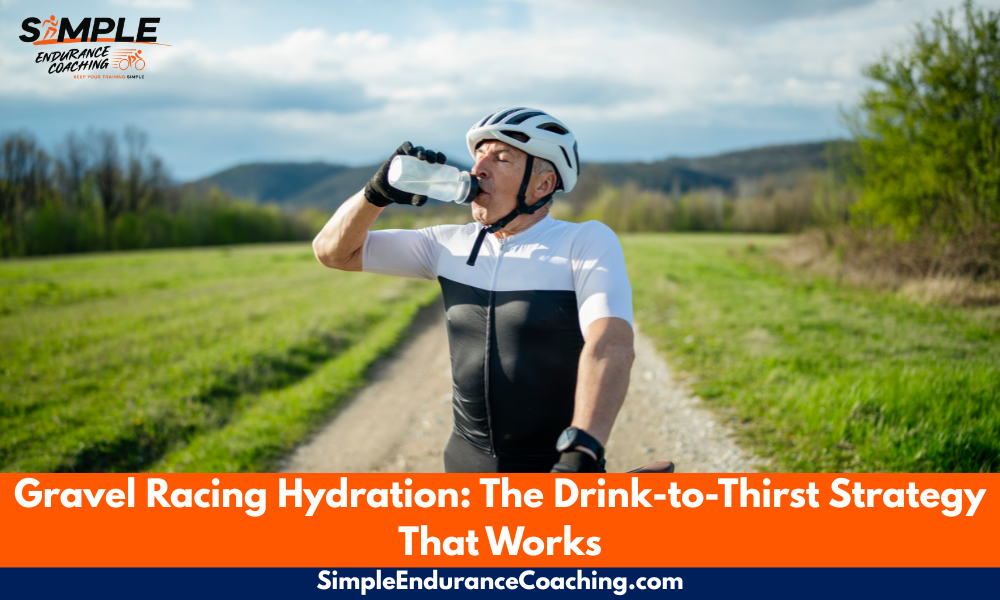
The research increasingly supports drinking to thirst as a smart strategy for endurance events.
Why? Because your thirst mechanism is actually pretty good at telling you what you need – when you’re paying attention.
The problems happen when:
- You ignore thirst (powering through because “I don’t need water yet”)
- You over-drink (forcing fluids when you’re not thirsty)
For 6+ hour gravel events, a general guideline:
- Aim for 400-800ml per hour depending on conditions and your sweat rate
- Drink when thirsty. Don’t wait until you’re parched
- Pre-hydrate properly: Show up to the start line already hydrated. Drink 500ml in the 2 hours before the gun goes off
The key is knowing your rate.
Weigh yourself before and after training rides.
If you’re dropping more than 2% of your body weight, you need to drink more.
If you’re gaining weight, you’re overdoing it.
Adapting Your Plan for Different Weather Conditions
This is where many people fail.
They have one hydration plan and try to use it everywhere. Here’s how to adapt:
Hot & Humid Conditions (75°F+ / High Humidity)
- Increase fluid intake: Your sweat rate can double in hot conditions. Plan for 600-1000ml per hour
- More electrolytes: Bump up sodium to 500-700mg per liter. Consider adding potassium and magnesium
- More frequent, smaller sips: Your stomach can only handle so much at once in the heat
Cool Conditions (Below 60°F)
- You still need to drink: Even in cold weather, you’re losing fluid through respiration and sweat
- Fewer electrolytes needed: Unless you’re sweating heavily, standard concentration is fine
- Warm fluids help: Room temperature or slightly warm water is better than cold in cool conditions—it absorbs faster and helps maintain core temp
- Don’t forget: Cold weather dehydration is sneaky because you don’t feel as thirsty
Variable/Unknown Conditions
- Bring more mix than you think: Better to have extra than run out
- Layer your approach: Start with standard concentration, adjust based on how you feel
- Check the forecast but prepare for anything: Weather can shift dramatically in a 6+ hour event
The Gravel-Specific Challenges
Gravel riding presents unique hydration hurdles:
- Limited aid stations: Unlike road races with frequent feed zones, gravel courses often have few opportunities. You need to carry more and plan accordingly.
- Janky terrain: Rough gravel makes drinking while riding harder. Practice grabbing and drinking from bottles on variable surfaces.
- Remote sections: Some courses go miles without anything. Carry enough to get to the next aid station plus a buffer.
- Extended efforts: A 6+ hour gravel event is a different beast than a 3-hour road race. Your nutrition and hydration strategy needs to account for the cumulative toll.
Your Pre-Race Hydration Checklist
The Week Before:
- Monitor your urine color (aim for pale yellow)
- Don’t drastically change your sodium intake
- Practice your race-day hydration during long training rides
The Day Before:
- Drink consistently throughout the day
- Don’t load up on water the night before (you’ll just pee it out)
Race Morning (2-3 hours before start):
- Drink 400-600ml with electrolytes
- Have a normal breakfast with sodium
- Don’t chug a huge amount right before the gun
At the Start:
- Take a final drink 10-15 minutes before go-time
- Start riding with a full bottle
Here are Three Things to Know About Hydrating for a Long Gravel Race
1. Add electrolytes to your water—drinking plain water during a long event flushes out sodium and can lead to dangerous hyponatremia.
2. Start hydrated and drink to thirst—show up to the start already hydrated, then let your body guide you during the ride.
3. Adjust for conditions—more fluid and sodium in heat, less in cold, and always carry more than you think you need between aid stations.
Need More?
Sign up for our free weekly newsletter where you’ll get these articles, plus links to our Athlete’s Compass podcast and other training tools.
Unlock the secrets to mastering gravel racing with our FREE Guide to Gravel Racing! Get yours here.
BOOK A CALL so we can discuss your goals, answer questions, and talk about making your endurance training more effective, fun, and Simple.
Paul Warloski is a:
- USA Cycling Level 1 Advanced Certified Coach
- RRCA Running Coach
- Training Peaks Level 2 Coach
- RYT-200 Yoga Instructor
- Certified Personal Trainer
- Certified Nutrition Advisor