The thing that separates good gravel riders from great ones isn’t raw power, although that helps.
It’s what happens when the road gets rough.
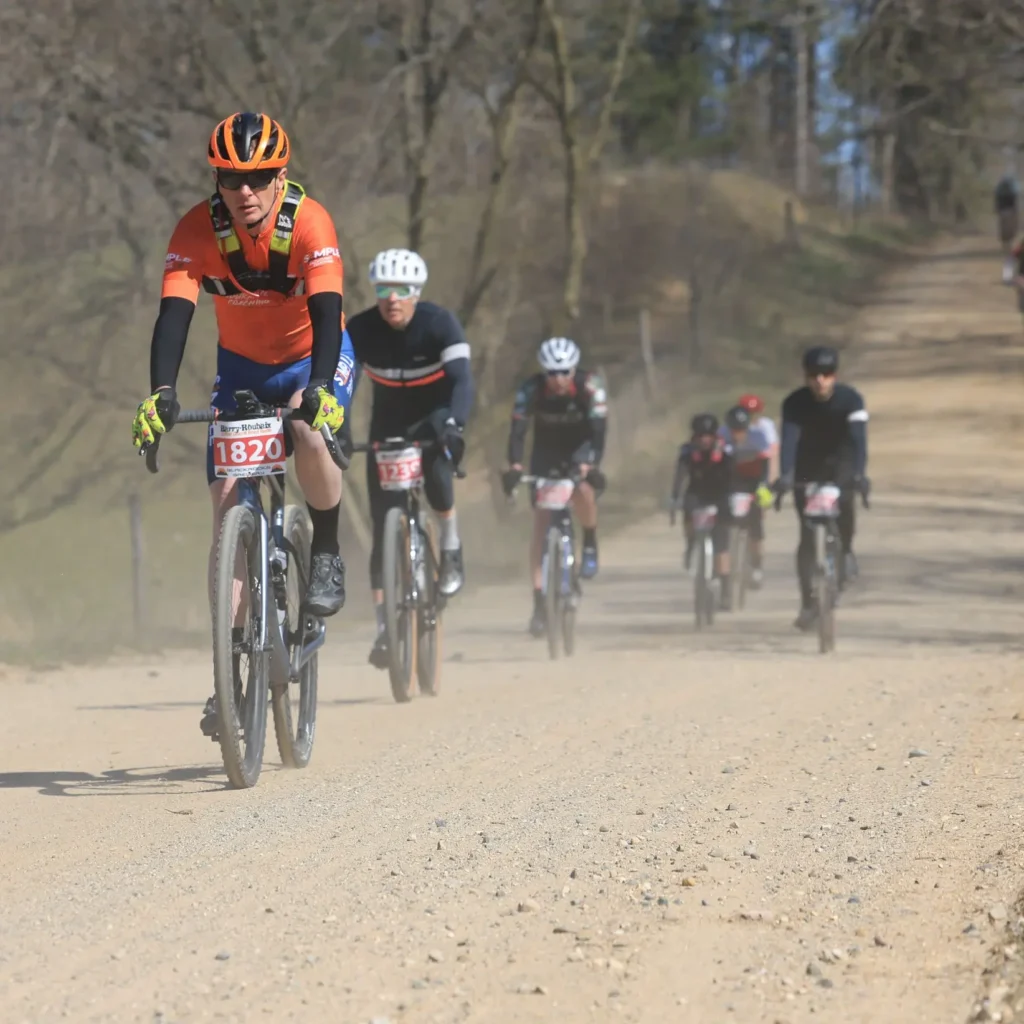
Potholes, washboard, loose rock, ruts, etc., that’s where races can be won or lost.
And here’s the truth many riders miss: you don’t ride around technical terrain.
You ride through it with intention.
Let’s talk about what that means.
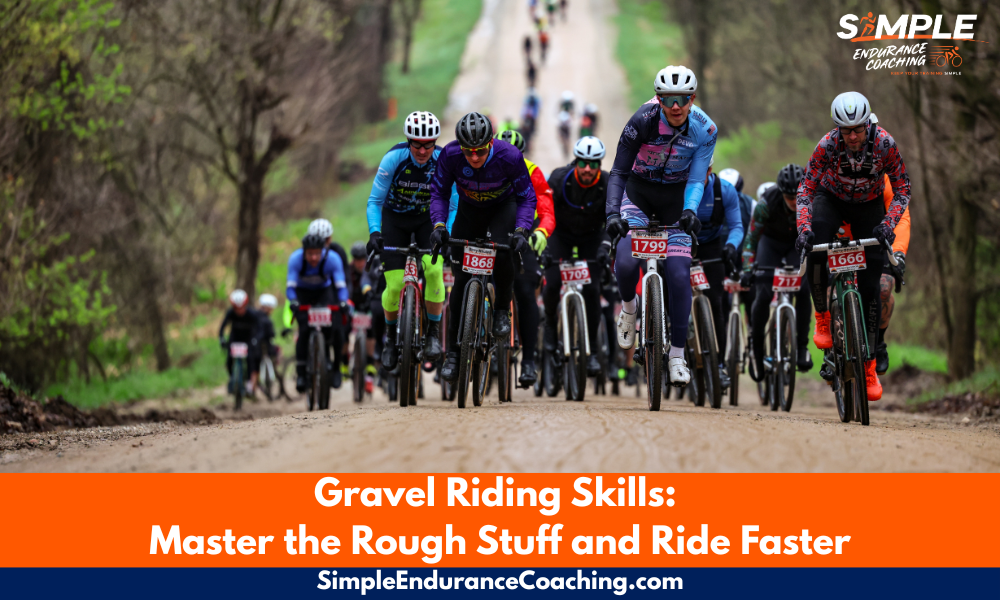
Line Selection: See the Whole Picture
Your eyes are your greatest tool through rough terrain.
Not the inch of gravel directly in front of your wheel: the entire section ahead.
Look through to the exit.
When you’re staring at that pothole, you’re going to hit that pothole. Your bike goes where your eyes go.
Scan 10-20 feet ahead, identify the smoothest line, and commit to it.
The smoothest line isn’t always the shortest.
Sometimes going around adds 2 feet but saves you 20 seconds in momentum.
In gravel, flow beats straight lines every time.
In washboard, find the edges. The center of the road is usually most chewed up. The tire tracks on the edges are often slightly smoother.
It’s not much, but over a mile of chatter, it adds up.
When to Push vs. When to Ease Off
This is where many riders blow it, both ways.
Push when you have momentum.
Speed is your friend on rough terrain.
A rolling bike tracks straight.
A slowing bike bounces, wanders, and loses control.
If you’ve got a clean line and good traction? Go.
Don’t feather brake through the rough stuff, maintain that speed and float through it.
Ease off when visibility drops.
Can’t see what’s coming?
Loosen your grip, lower your intensity, and let the bike find its path.
Coming into a blind rut? A rock garden? A loose downhill?
That’s not the time for heroics.
The key: match intensity to traction.
Loose gravel, wet conditions, loose sand, ease off before you lose grip.
The moment you feel the back wheel getting squirrelly, that’s not a signal to power through.
That’s a signal to relax, lighten your touch, and wait for better ground.
Washboard Survival
Washboard is just repeated small bumps, and it will shake you apart if you let it.
Stay loose. I mean loose.
Wrapped around the top of the bars, elbows bent, shoulders relaxed.
Your body is your suspension.
If you’re white-knuckling the grip, you’re fighting the bike instead of letting it float.
Light hands = fast hands.
On washboard, your front wheel needs freedom to move.
Hang on too tightly, and it’ll buck you off line.
Soft hands let the wheel track the surface while you steer with tiny pressure adjustments.
On really rough washboard, hover out of the saddle.
That gives the bike total freedom to move beneath you.
Yes, it’s harder work.
But it’s faster and keeps you in control.
Potholes and Ruts: The Eyes Have It
This is simple but people blow it constantly: see it, plan for it, execute.
Don’t try to dodge at the last second.
That’s how you wash out the front wheel or hit an even bigger hole, or worse, crash someone else out.
Spot it early, pick your line, and make one smooth move.
If you’re in a rut, stay in the rut.
Switching ruts mid-chatter is a recipe for disaster.
Pick one, commit to it, and look for the exit.
Tire Pressure: Your Secret Weapon
Here’s where some riders leave speed on the table.
Tire pressure isn’t a set-it-and-forget-it number—it’s your primary tuning knob for terrain.
The rule: rough terrain = lower pressure.
- Standard gravel (35-40mm): 30-45 PSI
- Technical/rocky terrain: 25-30 PSI
- Washboard and chunky gravel: 25-28 PSI
Why lower works: Dropping from 50 PSI to around 30 PSI improves vibration absorption by roughly 40%.
Your tires become miniature suspension.
They deform over rocks instead of hammering through them.
You maintain momentum, stay in control, and save your hands and back.
The tubeless advantage: If you’re running tubeless (and you probably should be), you can safely run 5-10 PSI lower than tubed setups.
No pinch-flat risk means more pressure drop = more compliance.
Front vs. rear: Run your rear tire 2-5 PSI higher than the front. It carries more weight and prevents rim strikes.
A rough starting point: Rider weight in pounds ÷ 8 for the rear, minus 2 PSI for the front.
A 160-pound rider? Around 18-20 PSI front, 20-22 PSI rear for rough terrain.
Adjust from there based on feel.
I also use the Silca Tire Pressure Calculator.
Tire Tread: What Matters
For technical gravel, tread matters more than you’d think:
- File-tread (smooth): Great on hardpack, limited in loose conditions
- Mixed tread: The sweet spot for variable terrain—enough edges to grip, still rolls efficiently
- Knobby: Mud-specific only. Too slow on hardpack.
If you’re facing a mix of conditions (which most gravel races deliver), a mixed-tread tire like the Continental Terra Speed, Panaracer GravelKing SK, or similar is your best all-around choice.
The Mental Game
Here’s what actually happens when you hit technical terrain: you tense up.
Grip tightens. Braking gets harder. Lines get tighter.
Loosen up.
The counterintuitive truth of technical riding: relaxed grip, lighter braking, and confident speed beat the instinctive tightening response every time.
Your bike needs room to move.
Trust your tires.
Trust your line.
And keep your eyes up.
Three Things to Know About Riding Technical Terrain on Your Gravel Bike
1. Loose = Go. Tight = Slow.
Speed is your friend on rough terrain. A rolling bike tracks straight while a slowing bike bounces, wanders, and gets away from you. Maintain momentum and float through the chatter.
2. Your Tires Are Your Suspension. Drop 5-10 PSI below your normal, around 25-30 PSI for 35-40mm tires on rocky or washboard sections. Lower pressure lets your tires deform over rocks instead of bouncing off them.
3. Look Through to the Exit. Your bike goes where your eyes go. Fix your gaze 10-20 feet ahead on the smoothest line and commit, don’t stare at the obstacles.
Need More?
Unlock the secrets to mastering gravel racing with our FREE Guide to Gravel Racing! Get yours here.
BOOK A CALL so we can discuss your goals, answer questions, and talk about making your endurance training more effective, fun, and Simple.
Paul Warloski is a:
- USA Cycling Level 1 Advanced Certified Coach
- RRCA Running Coach
- Training Peaks Level 2 Coach
- RYT-200 Yoga Instructor
- Certified Personal Trainer
- Certified Nutrition Advisor