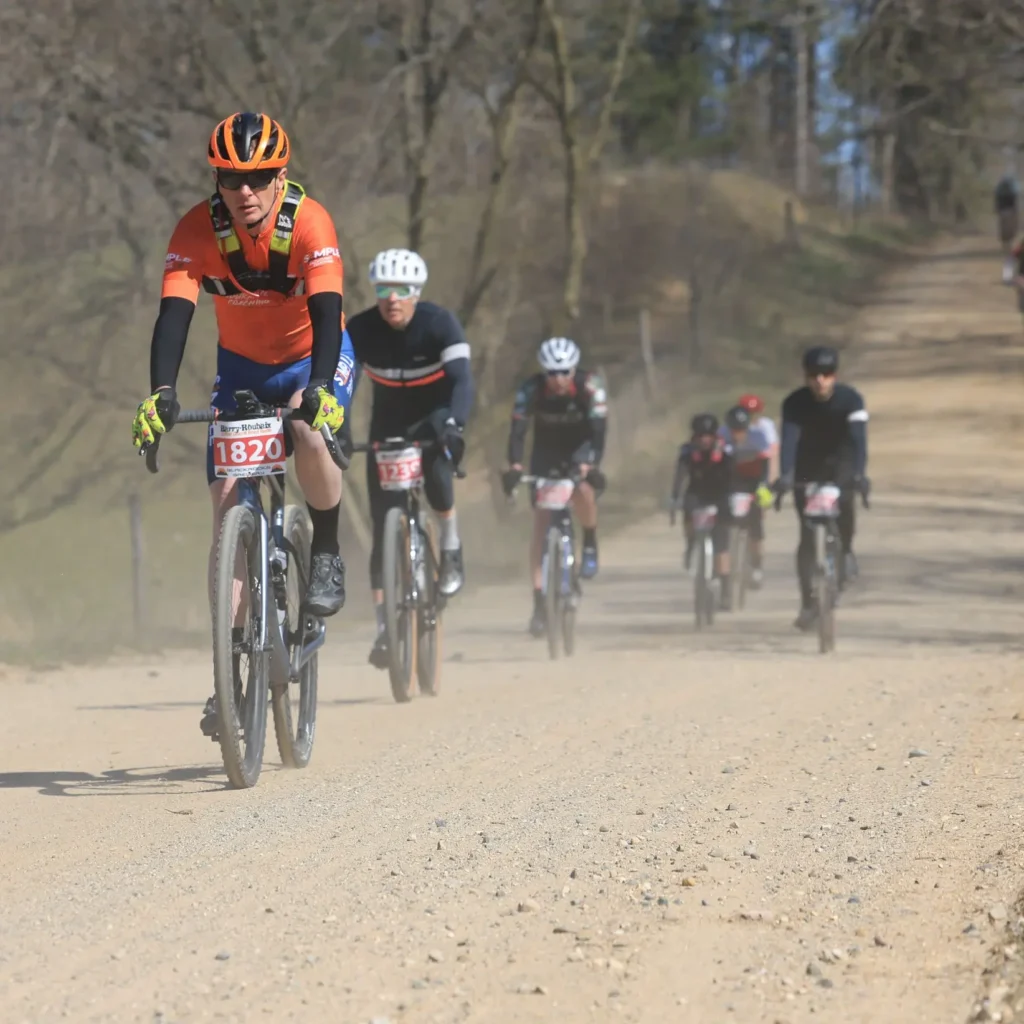
If you’re going to do any kind of long gravel race, you need to plan and prepare your hydration and nutrition.
Your goal is to maintain energy levels, support muscle function, and prevent dehydration and electrolyte imbalances.
You want to finish the race strong and feel good rather than limping across the line with a significant nutrition or hydration deficit.
Here’s a guide based on current sports nutrition research to prepare you for race day.
We’re not talking about general guidelines for fueling, just race-day nutrition and hydration for a successful event.
This is the sixth in a series of blog posts to help you prepare for a long gravel race.
Blog post #5: Strength training for gravel cycling performance
Blog post #4: Using intervals to improve performance
Blog post #3: Using the 80/20 model to schedule workouts.
Blog post #2: Building a base for gravel racing performance
Blog post #1: Five keys to training for gravel racing
Hydration essentials
As we exert ourselves, our bodies heat up, prompting sweat to cool down, leading to fluid and electrolyte losses.
Without adequate replacement, this can lead to dehydration, hyponatremia (low sodium), heat cramps, and other heat-induced ailments.
Proper electrolyte replenishment ensures peak performance and effective post-exercise recovery.
- Pre-Race Hydration. It’s important to start the race with optimal hydration and electrolyte levels. Drink approximately 500 ml (17 ounces) of water or an electrolyte solution 2-3 hours before the race, avoiding high-sugar options for healthier alternatives.
- Hydration During the Race. The American College of Sports Medicine recommends 200-300 ml (7-10 ounces) of fluid every 10-20 minutes during exercise, tailored to individual sweat rates and environmental conditions. A 20-ounce bottle per hour, with electrolytes, is a general guide, with adjustments based on personal needs. On long rides, I generally take two large bottles with electrolyte powder, and I take a couple of extra packs of electrolytes with me. I also have a hydration pack filled with plain water.
- Monitoring Hydration. Use thirst and urine color-aiming for light yellow-as hydration indicators. Regularly refill your bottles at rest stops to maintain hydration levels.
Electrolyte intake for endurance cycling
The quantity of electrolytes, including sodium, endurance cyclists need varies by individual sweat rates, electrolyte concentration in sweat, climate, and exercise duration and intensity.
Here are general recommendations:
- Sodium: 500-700 mg per liter of sweat lost, translating to 500-700 mg per hour during intense or prolonged activity.
- Potassium: 120-400 mg per hour to aid fluid balance and muscle function.
- Calcium and Magnesium: Approximately 100-200 mg each per hour, supporting muscle and nerve function.
Select electrolyte products containing these minerals in balanced amounts and test them before major events.
That means try out different electrolyte mixes in different weather conditions to see how they affect your performance.
Sodium intake considerations
Hydration and electrolyte needs are highly individualized.
Factors to consider include:
- Sweat Rate and concentration: Higher sweat rates or sodium levels may necessitate increased intake.
- Environment: Increased sweat loss in hotter, more humid conditions requires more sodium and electrolytes.
- Duration and acclimatization: Longer exercises and acclimatization to heat affect sodium needs and sweat composition.
Nutritional strategies
- Carbohydrates: Aim for 40 to 70g per hour for sustained energy, utilizing hydration packs and bottles mixed with carbohydrate and electrolyte powders, supplemented with easily digestible foods.
- Protein: There’s some evidence that you might want to incorporate small amounts during the ride for muscle repair, though the primary intake should be post-exercise.
- Food Choices: Experiment on long training rides with energy gels, chews, bars, and real foods like bananas and sandwiches to discover what best suits your digestive system and preferences. It can be a challenge to eat solid food because the digestion process can take energy away from your muscles. So again, practice consuming what you’re going to eat during the race. Generally, I will have water in my hydration pack and bottles filled with carbohydrate and electrolyte powders. I supplement that with Embark Maple Syrup.
- Pre-Ride Meal: Consume a balanced meal 2-4 hours before the race, focusing on complex carbohydrates, healthy fats, and protein.
Practical advice
- Personalization: Tailor hydration and nutrition plans to your body’s responses and training experiences.
- Practice: I’ve said it often in this article, practice on long training rides to see what works. Test your strategies on long training rides to determine what works best.
- Flexibility: Be ready to adapt your plan based on race day conditions and how your body feels, possibly increasing intake as needed.
The research underscores the importance of maintaining energy balance and hydration to enhance performance and facilitate recovery.
Effective race fueling, distinct from everyday nutrition, is pivotal for a successful and fast gravel century finish.
It’s also recommended to continue hydrating and refueling immediately after the ride to support recovery.
Need more?
Unlock the secrets to mastering gravel racing with our FREE Guide to Gravel Racing! Get yours here.
BOOK A CALL so we can discuss your goals, answer questions, and talk about making your endurance training more effective, fun, and Simple.
Paul Warloski is a:
Certified Nutrition Advisor
USA Cycling Level 1 Advanced Certified Coach
RRCA Running Coach
Training Peaks Level 2 Coach
RYT-200 Yoga Instructor
Certified Personal Trainer