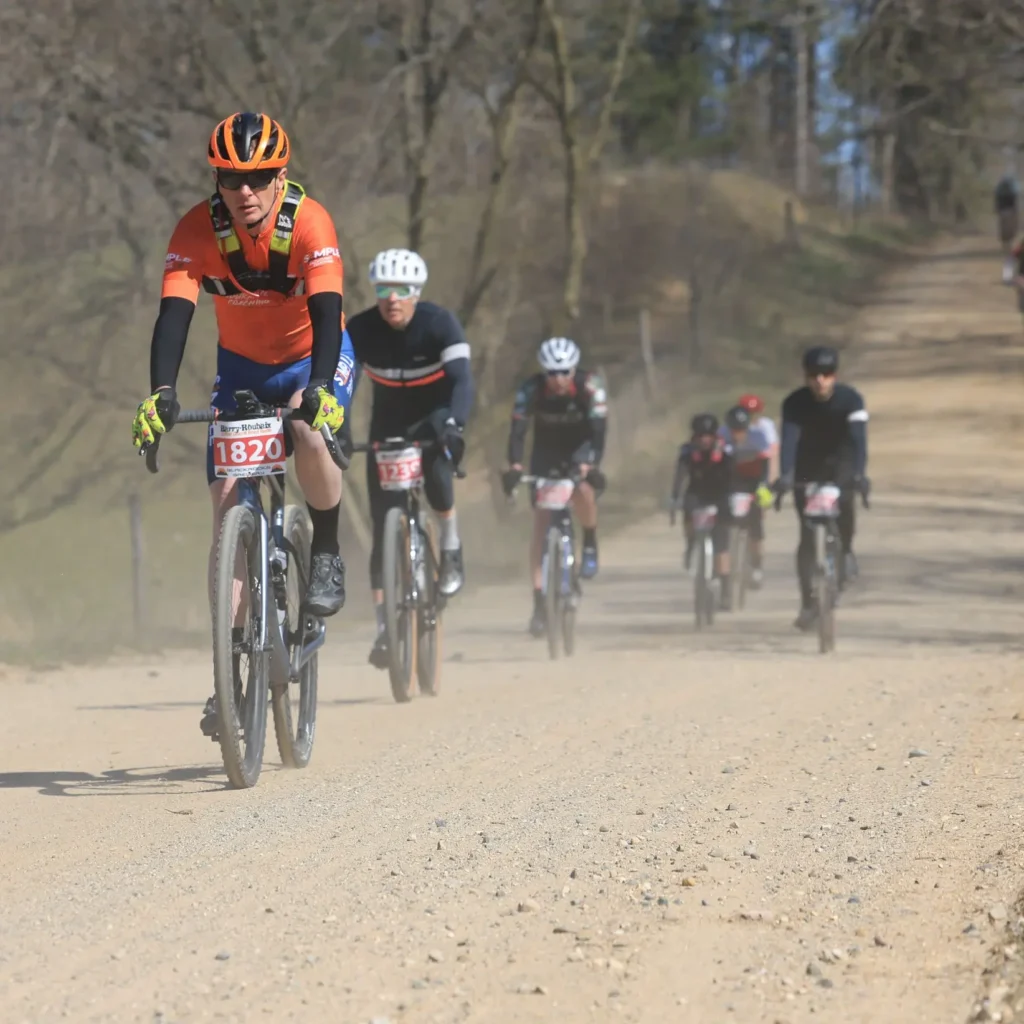
As endurance athletes, effective goal setting is essential to staying motivated and excelling in your training.
However, while outcome goals-like completing a race or achieving a specific time-are important, they often overshadow the real drivers of progress: process goals.
This blog will guide you in setting effective process goals to support your big ambitions in 2025.
Are Your Endurance Goals for 2025 Already Set?
By now, most endurance athletes have set up their schedules of A races for 2025.
My outcome goals are part of the Gravel Racing 2025 season, culminating in gravel nationals in September in LaCrescent, MN.
Those are outcome goals, and we measure them in terms of results.
But we don’t have much control over outcome goals, and, as such, they’re not very effective in helping us perform at our best.
Process goals-the daily and weekly steps we take-are what truly drive success.
Process Goals for Endurance Athletes: What You Need to Succeed in 2025
One of my athletes is targeting gravel nationals as well.
We’ve broken her process goals down into four categories: endurance, intervals, nutrition, and strength training.
For each of these categories, we’re looking at what she needs to do to reach her outcome goal on a daily, weekly, and monthly basis. (Thanks to Andy Diem for this time structure.)
These are process goals that she focuses on every day, then for a week, and over the month.
For example, a daily process goal for endurance training is to consume body weight in grams of protein.
A weekly goal is to get two sessions of strength training in the gym.
And her monthly goal is to get at least one three-hour ride per week, and more volume if she has time.
Goals are Part of Daily Decision-Making
We refer to these goals in every meeting we have.
We also troubleshoot the challenges she’s having with reaching the process goals.
The beauty of the process goal is that it’s something we have control over, and if we can’t reach it, we can fix it the next day.
The process goals are part of a daily decision-making process: Does this decision affect my process goal and my likelihood of reaching the outcome goal.
Start Making List of Process Goals
Now that you’ve seen how process goals work in practice, let’s explore how you can apply this approach to your own training.
Make a list of your A races in 2025.
You’ve probably already done this.
Take five minutes right now to jot down your A races and identify your top three limiters.
The sooner you start, the better your chances of success.
Then start thinking about your strengths and limiters, the course, the race, and probable conditions.
What do you need to be able to do to have your best chance at accomplishing your outcome goal:
Do you need to improve your running economy, climbing on the bike for the long hills in the race, or improve your swim technique?
Make a list of the three or four top skills you need to improve.
Daily and Weekly Habits to Support Your Process Goals
Your next step is to break down those skills for your process goals: What do you need to do to improve these skills?
One way to think of it is to look at your daily habits: What needs to happen daily to improve my skills?
Nutrition, consistency of training, sleep habits, and recovery come to mind.
Then what needs to happen every week?
Look at your training schedule: Are you getting in the right workouts to maximize your opportunity to succeed in your A race? Are you getting in your strength training, if that’s a limiter?
For a runner, a weekly process goal might be a focused hill workout, while a swimmer might aim to improve technique with one dedicated drill session each week.
Find an Accountability Partner
You should have a good list now of process goals to work on.
Write these five or six goals on a card and post them on your desk or mirror in the bathroom, someplace you’ll see them regularly.
And discuss them with a partner, coach, or friend, someone to whom you can be accountable.
Check in with that person regularly to discuss your progress on the process goals.
Remember, success isn’t built in a day-it’s built daily. With clear process goals and consistent effort, you’ll set yourself up for a rewarding and successful 2025 race season.
Three Things To Know About Setting Process Goals for Success
- Process goals, which focus on daily and weekly habits, are the real drivers of success because they build the foundation for achieving your outcome goals.
- Effective process goals should address your key limiters and strengths. Divide them into daily, weekly, and monthly actions.
- Regularly review your progress with a coach, partner, or training buddy to stay accountable.
Need more?
Unlock the secrets to mastering gravel racing with our FREE Guide to Gravel Racing! Get yours here.
BOOK A CALL so we can discuss your goals, answer questions, and talk about making your endurance training more effective, fun, and Simple.
Paul Warloski is a:
- USA Cycling Level 1 Advanced Certified Coach
- RRCA Running Coach
- Training Peaks Level 2 Coach
- RYT-200 Yoga Instructor
- Certified Personal Trainer
- Certified Nutrition Advisor