by Coach Paul Warloski
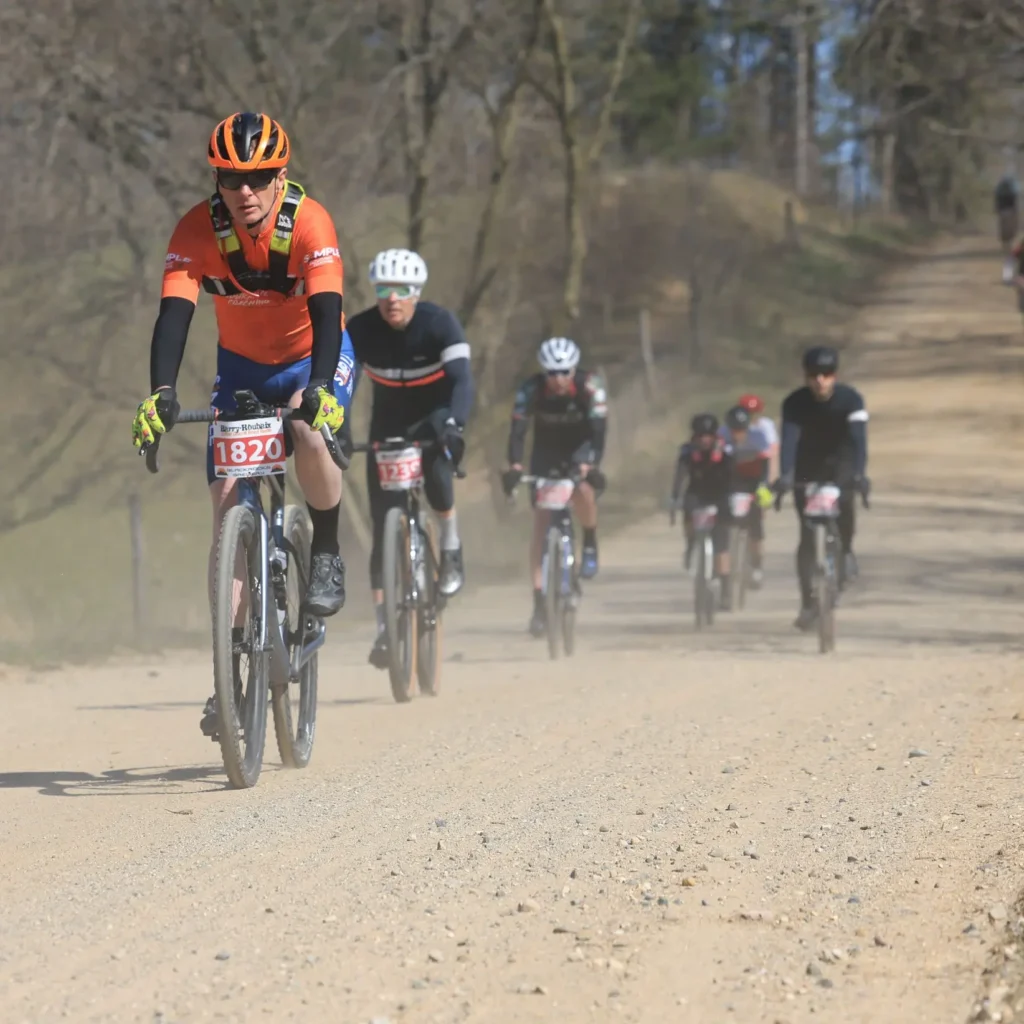
Gravel races throw everything at you:
- Three to eight plus hour efforts in potentially extreme conditions
- Limited aid stations – sometimes 20+ miles between water sources
- Variable terrain – climbs that spike your core temperature
- Remote locations – no quick escape if things go wrong
- Unpredictable weather – can go from mild to scorching in hours
The research is crystal clear: acclimating to the heat before a race can improve long-duration endurance performance by five to 23 percent.
For gravel racing, that translates directly to seconds or minutes saved per hour.
I did a lot of heat training last winter and spring and kept it going all season.
When I did a July gravel race in 90-some degree temperatures, I felt fine.
This stuff works like the poor person’s altitude camp.
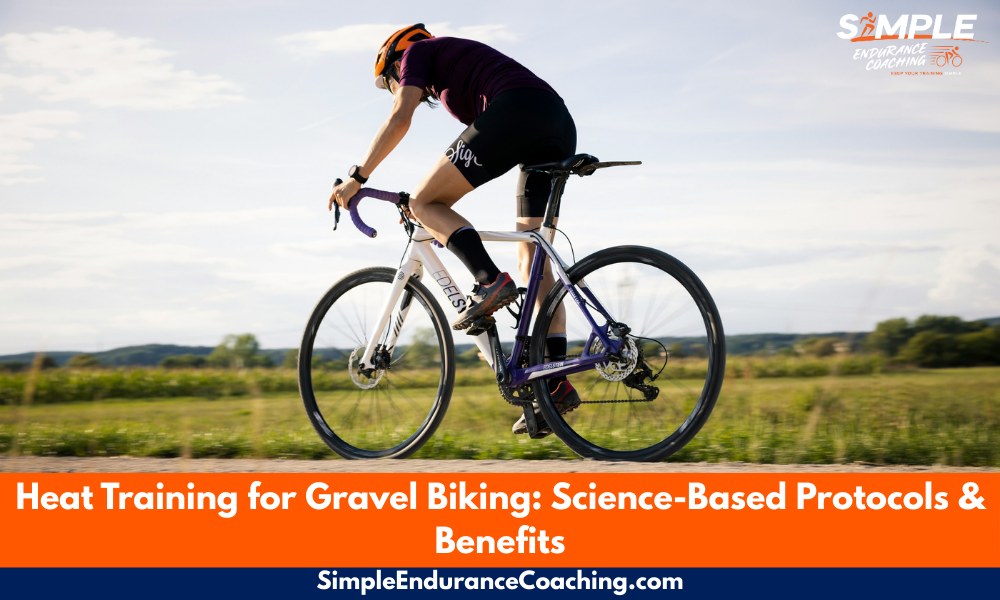
Why Heat Training Works: The Science
Heat acclimation triggers a cascade of physiological adaptations that make your body more efficient at managing temperature stress.
When you expose yourself to heat regularly, whether through HIIT sessions or endurance training, your body essentially becomes a better “cooling system.”
Key Physiological Changes:
- Enhanced thermoregulation – Your body becomes more efficient at dissipating heat through improved sweat rate and skin blood flow
- Plasma volume expansion – Increases blood volume, improving cardiovascular stability
- Lower core temperature – Your resting and exercising core temp decreases
- Reduced heart rate – Your cardiovascular system works less hard in heat
- Improved lactate threshold – Your body can handle higher intensities before accumulating lactate
- Better movement economy – Up to 2.5% improvement in efficiency
The Performance Benefits Are Substantial
The research shows impressive performance gains:
- Time-to-exhaustion: Up to 23 percent improvement
- Time trial performance: five to seven percent improvement
- VO2max: six percent increase
- Heat tolerance: Dramatically reduced physiological strain
- Cool weather performance: Some studies show up to six percent improvement even in temperate conditions
2018 research from the NCBI consensus statement confirms that properly implemented heat acclimation protocols are among the most effective performance enhancement strategies available to endurance athletes.
Two Proven Approaches: Active vs. Passive Heat Training
Active Heat Training (Exercise in Heat)
This involves training in elevated temperatures (through indoor training or hot outdoor conditions).
This is basically riding inside without a fan and with a heater and extra clothing.
With the really cold weather we’ve had in Wisconsin this past week, I’ve moved my bike and trainer inside a pantry closet.
I still use the heater and have a layer of clothing on.
Protocol:
- Duration: 60 to 120 minutes per session. However, start slowly with 10 minutes and build from there. Every person is different when it comes to acclimation to the heat.
- Frequency: six to 14 exposures over one to two weeks
- Intensity: 50 to 60 percent VO2max for longer durations
- Temperature: 35 to 40°C (95-104°F), 40-60 percent humidity
- Timing: Complete two to three weeks before the competition
2021 Research: New studies show that intermittent, self-regulated intensity heat training (where athletes adjust intensity based on RPE) can be just as effective as traditional steady-state protocols, with potentially less training stress.
Passive Heat Training (Sauna/Bath)
This involves heat exposure AFTER training without additional exercise.
What the Research Shows:
A 2020 study in middle-distance runners found that post-exercise sauna bathing (three sessions/week for three weeks) was highly effective:
- Reduced peak body temperature by 0.2°C
- Lowered heart rate during heat stress by 11 bpm
- Improved VO2max and lactate threshold markers
- Enhanced overall heat tolerance
Optimal Sauna Protocol:
- Temperature: 101-108°C (214-226°F), 5-10% humidity
- Duration: 20-30 minutes post-exercise
- Frequency: three times per week for three to four weeks
- Timing: Immediately after training sessions
Why Post-Exercise Sauna Is Effective
Recent research has identified post-exercise sauna as a great tool for heat acclimization several reasons:
- No training interference – Your workouts remain unchanged
- Convenient – Can be done after any training session
- Cost-effective – No need for expensive heat chambers
- Scalable – Works for various fitness levels and sports
The key is the timing: heat exposure immediately after exercise, when your body is already generating heat, maximises the adaptation response.
However, it can be a challenge to get to a sauna after training.
That’s why I start heat adaptation in the winter and spring when I’m on the trainer.
I use a portable heater and wear extra clothing.
Implementation Strategies for Endurance Athletes
- Combine heat training with base miles
- Use indoor trainer with heat exposure (heaters, hot room)
- Post-ride sauna sessions (20 to 30 minutes)
- Monitor core temperature if possible (goal: reach 38.5°C)
Periodization Tips:
- Start early: Begin at least three to four weeks before your key events
- Peak timing: Most adaptation occurs in weeks two and three
- Maintenance: Minimal heat exposure (1x/week) can maintain gains
- Taper: Reduce heat exposure five to seven days before major competition
Safety Considerations & Best Practices
Critical Safety Points:
- Always start hydrated and continue hydrating during/after. Inc
- Monitor for signs of heat illness (dizziness, nausea, confusion)
- Gradually increase exposure duration and temperature
- Never exceed 40°C core body temperature without medical supervision
- Consider individual factors (fitness level, heat tolerance, medication use)
Hydration Strategy:
- Arrive at training well-hydrated (clear urine)
- During heat sessions, drink to thirst + 500ml post-session
- Include electrolytes, especially sodium
Signs You’re Getting Results
Within one week:
- Reduced perceived exertion in heat
- More comfortable in warm conditions
- Faster recovery between intervals in heat
Within two to three weeks:
- Lower heart rate during heat exercise
- Improved exercise economy
- Better heat tolerance during longer efforts
Beyond three weeks:
- Significant performance improvements in heat
- Enhanced cool-weather performance
- Superior hydration strategies
Heat Acclimation Gives Gravel Cyclists An Edge
The research is clear: heat acclimation is one of the most underutilized performance enhancement tools available to endurance athletes.
With proper implementation, gravel cyclists can gain a significant competitive advantage—often with minimal additional time investment and maximum practical benefits.
The Bottom Line: Gravel racing success often comes down to who handles the adverse conditions best.
Heat training gives athletes a massive physiological advantage that translates directly to:
- Better power output when others are fading
- Improved decision-making under stress
- Enhanced recovery between efforts
- Superior hydration strategies
- Mental confidence in challenging conditions
The research is definitive: Athletes who complete proper heat acclimation protocols consistently outperform those who don’t in hot conditions.
For gravel racing, where conditions can be extreme and aid stations sparse, this advantage is amplified.
Heat training isn’t just about surviving the race—it’s about thriving when others are just surviving.
Three Things You Should Know About Heat Acclimatizing
1. Heat Training Actually Works
Heat acclimation delivers five to 23 percent performance improvements in hot conditions through plasma volume expansion, lower core temperature, and better cardiovascular efficiency.
2. Post-Exercise Sauna Is Your Best Bet (Especially for Gravel Racers)
Use 20-30 minutes in sauna (101-108°C) immediately after training, 3-4x per week for 3 weeks – it’s effective without disrupting your training schedule.
3. Active Training on Your Bike Trainer Is Surprisingly Easy
Add heat to indoor training sessions using heaters, extra clothing, or hot rooms for 60-90 minutes at 50-60% intensity, 3-4x per week for 2-3 weeks before races.
Need more?
Unlock the secrets to mastering gravel racing with our FREE Guide to Gravel Racing! Get yours here.
BOOK A CALL so we can discuss your goals, answer questions, and talk about making your endurance training more effective, fun, and Simple.
Paul Warloski is a:
- USA Cycling Level 1 Advanced Certified Coach
- RRCA Running Coach
- Training Peaks Level 2 Coach
- RYT-200 Yoga Instructor
- Certified Personal Trainer
- Certified Nutrition Advisor