by Coach Paul Warloski
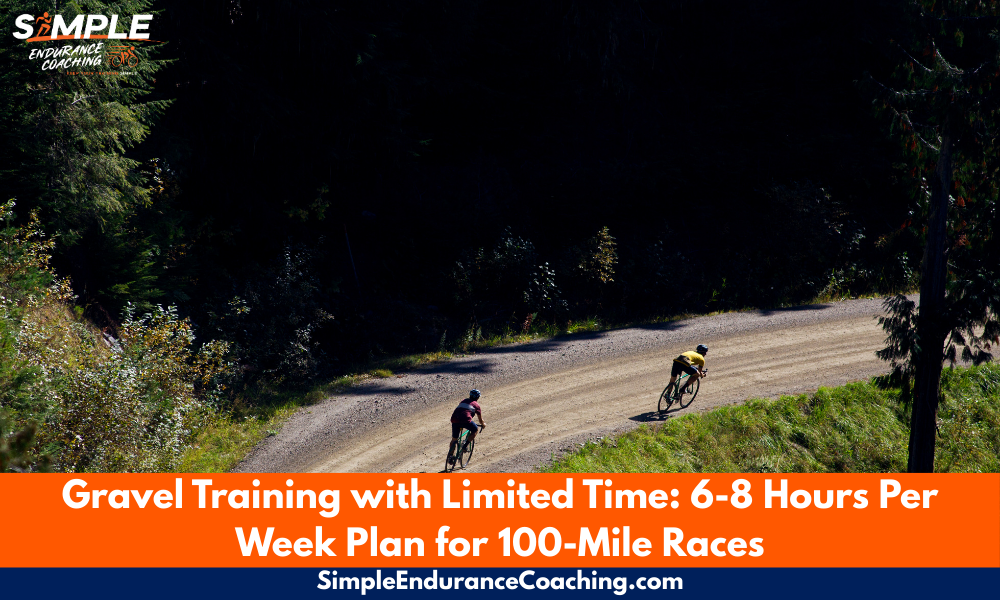
One common question I get from athletes is “I only have 6-8 hours per week. Is it even realistic to train for a 100-mile gravel race?”
The honest answer?
It depends.
What are your goals, how much experience have you had, can you be consistent with that 6 to 8 every week?
Here’s how to make the most of whatever time you have.
What the Research Says About Training Efficiency
Here’s something that might surprise you: elite endurance athletes spend 80%+ of their training time at intensities below their lactate threshold. That’s Zone 2—conversational pace, where you’re working but could easily chat with a riding buddy.
The groundbreaking research from Stephen Seiler and Espen Tønnessen (2009) analyzing training diaries of Olympic champions found something crucial: world champions train SMART AND a lot.
You can’t have one without the other.
But here’s the nuance for you — the athlete with a full-time job and finite hours:
The minimum effective dose EXISTS, but it has boundaries.
The Reality Check: What Can You Actually Achieve?
With 6-8 hours per week, you CAN build fitness for gravel racing.
But let’s be real about expectations:
| Event Distance | Training Weeks Needed | Realistic Goal |
| 50-75 miles | 6-8 weeks | Complete comfortably |
| 100 miles | 10-12 weeks | Finish strong |
| 200 miles | 16+ weeks | Possible, but high commitment |
With only 6-8 hours weekly, I’d encourage most athletes to target 50 to 100-mile events rather than 200-mile ultras.
That’s not being negative, it’s being honest about what produces a fun experience rather than a survival mission and unpleasant ride.
The Optimal Training Structure for Limited Time
Here’s your weekly template for maximum efficiency:
Week At A Glance (6-8 hours total)
| Day | Ride Type | Duration | Purpose |
| Tuesday | Intervals | 45-60 min | Threshold & VO2 max |
| Thursday | Tempo/Sweet Spot intervals | 60-90 min | Sustained effort capacity |
| Saturday/Sunday | Long Ride | 3-4 hours | Endurance foundation |
| 2-3 other days | Endurance and strength | 20-30 min | Active recovery |
The Three Training Pillars (Optimized for Time)
1. Long Ride (Weekend)
This is your cornerstone workout.
This is where you build the endurance engine that carries you through gravel events.
- Duration: 3-4 hours (aim for 70-80% of event time)
- Intensity: Zone 2, conversational pace, Rate of Perceived Exertion 3-5/10
- Surface: Gravel is preferred, but a road is also acceptable.
- Key: Practice your nutrition, hydration, and bike handling.
For a 100-mile race, your longest training ride could be 60-75 miles.
The last 25-30% is mental toughness and race-day energy management.
2. Mid-Week Intensity
This is where limited-time athletes get their biggest return. Short, hard efforts that pack a punch.
Two formats work best:
A) Threshold Intervals
- 3-4 x 12 minutes at “brisk but sustainable” pace. RPE 7-8
- 4-minute recovery between
- This mimics the sustained effort of pushing through chunky gravel
B) VO2 Max Intervals
- 5-6 x 3 minutes HARD. RPE 9
- 3-minute recovery
- 2x per month is plenty
3. Tempo/Sweet Spot
If you can only do three rides per week, make one of them a tempo/ sweet spot ride:
- 2 x 20 minutes at 80-92% of threshold. RPE 6-7
- 10-minute recovery between intervals
The tempo/sweet spot zone is where you’ll typically ride during the race.
It’s good practice riding at that pace.
The 80:20 Rule (With a Limited-Time Twist)
Traditional coaching prescribes 80% Zone 2, 20% high-intensity work.
For athletes with 6-8 hours, I’d adjust this to:
- 75% Zone 2 (your long rides + easy spins)
- 25% Threshold/ VO2 work/ Sweet Spot
Why? Because limited-time athletes need every workout to count.
That doesn’t mean grinding yourself into the ground.
It means being strategic about intensity when you do push.
Should You Adjust Your Goal Event?
Here’s my honest take:
If you have 6-8 hours per week and are new to gravel racing:
- Start with a 50-miler or 75-miler
- Build your base and race experience
- Then progress to 100+ mile events
If you have a strong cycling background but limited time:
- You can absolutely tackle 100-milers
- But commit to consistency over 10-12 weeks
- Don’t try to “cram” fitness in 4-6 weeks
If you’re eyeing 200-mile events like Unbound:
- It IS possible with 6-8 hours, but it’s a significant commitment
- You’ll need to protect those weekend long rides religiously
- Consider whether the time investment matches your life priorities
The Non-Negotiables
Regardless of how few hours you have, three things matter most:
- Consistency — Four quality rides weekly beats six half-hearted ones
- Long ride continuity — Missing your weekend ride breaks the adaptation chain
- Recovery — Sleep, nutrition, and easy days aren’t optional.
Your Next Steps
Here’s what you can do this week:
- Assess your calendar — Block your training times like appointments
- Choose your event — Pick something 10-12 weeks away that matches your realistic capacity
- Start Tuesday — Hit one quality interval session this week
- Protect the weekend — Your long ride is non-negotiable
The Bottom Line
You don’t need 15 hours per week to complete a gravel race. You need consistency, strategy, and realistic expectations.
The athlete who trains smart for eight hours weekly will beat the athlete who half-commits for 15 hours every time.
What gravel event are you targeting this season?
And what’s your current weekly riding time? Drop it in the comments: I’d love to help you figure out what’s realistic.
Three Things You Should Know About Training For Long Races on Limited Time
- Research confirms elite endurance athletes spend 80%+ of training time at low intensity, so the bulk of your limited hours should be spent building an aerobic foundation at a conversational pace.
- With just 6-8 hours per week, you can successfully prepare for 50 to 100-mile gravel races by focusing on three weekly workouts: one long ride, one interval session, and one threshold or sweet spot effort.
- Training smart beats training long—consistency and strategic intensity matter far more than accumulating hours, so protect your quality sessions and adjust your race goals to match your available time.
Need More?
Unlock the secrets to mastering gravel racing with our FREE Guide to Gravel Racing! Get yours here.
BOOK A CALL so we can discuss your goals, answer questions, and talk about making your endurance training more effective, fun, and Simple.
Paul Warloski is a:
- USA Cycling Level 1 Advanced Certified Coach
- RRCA Running Coach
- Training Peaks Level 2 Coach
- RYT-200 Yoga Instructor
- Certified Personal Trainer
- Certified Nutrition Advisor